
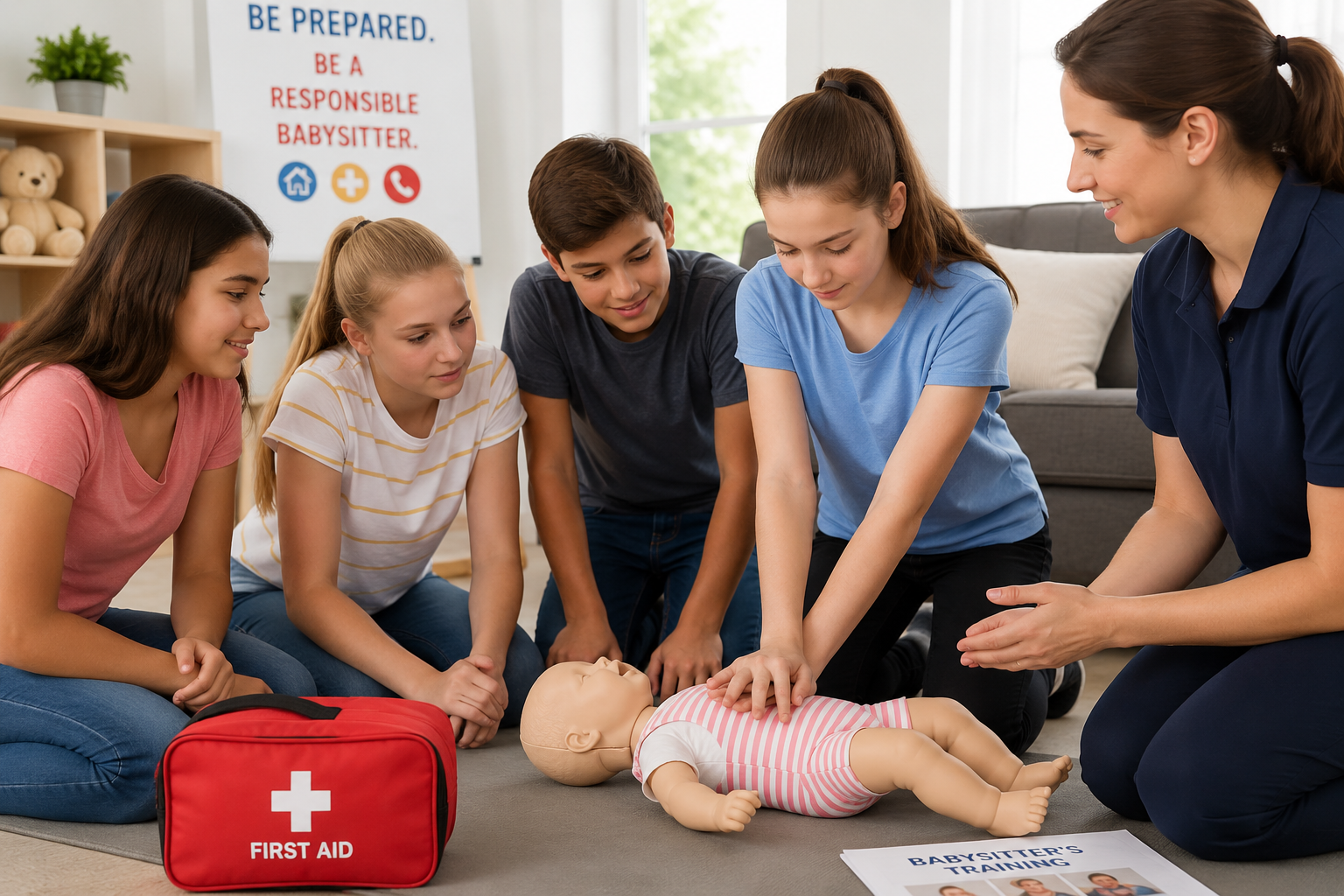
Babysitter’s Training for Young Caregivers
East Coast Safety Consulting offers American Red Cross Babysitter’s Training for young people who want to develop the knowledge, judgment, and practical skills needed to care for infants and children safely and responsibly.
Students learn childcare basics, supervision, household safety, emergency planning, age-appropriate activities, feeding, diapering, behavior management, professionalism, communication with parents, and practical skills for beginning a babysitting business.
Selected classes may also include Pediatric First Aid, CPR, and AED certification for students who want additional emergency-response preparation.
Who Should Take Babysitter’s Training?
Babysitter’s Training is designed for young people preparing to care for infants and children, whether they are planning their first paid babysitting job or simply want to become more responsible and prepared when helping family members or neighbors.
Current American Red Cross Babysitter’s Training programs are designed primarily for youth in the early teen years. Families should review the individual class listing for the accepted age range before registering.
New and Future Babysitters
- Students preparing for a first babysitting job
- Young people who want to earn money responsibly
- Students interested in childcare or education
- Youth preparing to care for neighborhood children
- Young caregivers who want greater confidence
Family and Community Helpers
- Older siblings
- Mother’s helpers
- Youth volunteers
- Camp and recreation assistants
- Students helping relatives with childcare
Babysitter’s Training Course Options
What Students Learn in Babysitter’s Training
Infant and Child Care
- Feeding infants and children
- Diapering basics
- Holding and handling children safely
- Basic hygiene
- Age-appropriate activities
- Comforting an upset child
Safety and Prevention
- Recognizing household hazards
- Preventing common injuries
- Maintaining active supervision
- Gathering emergency information
- Responding to unexpected visitors
- Knowing when to call for help
Communication
- Talking with parents before a job
- Reviewing household rules
- Learning routines and expectations
- Discussing allergies and medical concerns
- Reporting problems honestly
- Building trust with families
Leadership
- Making responsible decisions
- Remaining calm when problems occur
- Setting appropriate boundaries
- Managing common behavior issues
- Following parent instructions
- Understanding caregiver responsibility
Babysitting Business
- Preparing for a first job
- Discussing responsibilities
- Understanding payment expectations
- Professional communication
- Building a positive reputation
- Managing scheduling responsibly
Emergency Preparedness
- Calling 911
- Fire emergencies
- Severe weather
- Unexpected illness or injury
- Emergency evacuation
- Contacting parents or trusted adults
Pediatric First Aid, CPR and AED Training
Young caregivers who choose a Babysitter’s Training class that includes Pediatric First Aid, CPR, and AED receive additional instruction for recognizing and responding to common childhood emergencies.
This option can be especially valuable for young people who expect to care for infants or younger children and want to develop practical emergency-response skills in addition to traditional babysitting preparation.
Students must successfully complete all required instruction, assessments, and hands-on skills evaluations to receive any applicable First Aid, CPR, and AED certification.
Emergency Skills May Include
- Child CPR
- Infant CPR
- Relief of choking
- Recognizing breathing emergencies
- AED operation
- Bleeding control
- Burn care
- Allergic reactions
- Seizure awareness
- Common childhood injuries
Babysitter’s Training for Girl Scout Troops
East Coast Safety Consulting’s Babysitter’s Training and optional Pediatric First Aid, CPR, and AED instruction cover practical childcare, safety, emergency-response, and caregiver skills that overlap with several Girl Scouts of the USA badge programs.
Depending on the Girl Scout’s grade level and the course option selected, participation may help complete learning activities associated with the following national Girl Scout badges.
Cadette Babysitter Badge
This is the strongest match for the standard Babysitter’s Training course. Students develop childcare, safety, professionalism, communication, activity-planning, and emergency-preparedness skills that closely align with the subject matter of the Cadette Babysitter badge.
Best course option:
American Red Cross Babysitter’s Training
Junior First Aid Badge
Eligible Junior Girl Scouts participating in the expanded course can develop emergency-response skills related to first aid, calling for help, recognizing emergencies, and caring for an injured or suddenly ill person.
Best course option:
Babysitter’s Training with Pediatric First Aid, CPR and AED
Cadette First Aid Badge
Cadettes choosing Pediatric First Aid, CPR, and AED training receive hands-on emergency-response instruction that can support work toward the Cadette First Aid badge.
Best course option:
Babysitter’s Training with Pediatric First Aid, CPR and AED
Senior First Aid Badge
Senior Girl Scouts within the accepted course age range can use the Pediatric First Aid, CPR, and AED portion to strengthen emergency-response knowledge and practical skills relevant to the Senior First Aid badge.
Best course option:
Babysitter’s Training with Pediatric First Aid, CPR and AED
Building Professional Habits from the First Job
Babysitting is more than playing games or serving snacks. Families place significant trust in the person caring for their children, and students learn that responsible caregivers must remain attentive, follow instructions, protect private information, communicate clearly, and make safe decisions throughout the job.
Before the Babysitting Job
- Meet the family and children
- Review household rules
- Collect emergency contact information
- Learn about allergies and medical concerns
- Confirm routines and responsibilities
- Discuss arrival, departure, and payment
During the Babysitting Job
- Provide active supervision
- Follow parent instructions
- Limit personal phone use
- Maintain appropriate boundaries
- Respond calmly to problems
- Report concerns honestly
Babysitter’s Training Certification
Students who successfully complete all applicable course requirements receive the designated American Red Cross Babysitter’s Training certificate or course-completion credential for the program in which they are enrolled.
Students enrolled in an option that includes Pediatric First Aid, CPR, and AED must also successfully complete the required emergency-response instruction and skills evaluations to receive the applicable certification.
Course completion does not determine whether a student is legally, physically, emotionally, or developmentally ready to babysit independently. Parents and guardians remain responsible for deciding when a young person is prepared to accept childcare responsibilities.
What Students Should Bring
Requirements vary by class and training location. Families should always review the registration confirmation before attending.
Course Materials
Bring any workbook, student manual, online completion certificate, or other material listed in the registration instructions.
Comfortable Clothing
Students should wear clothing appropriate for group activities, demonstrations, kneeling, and hands-on CPR practice when included.
Food and Drinks
Bring lunch, snacks, or a water bottle when instructed. Some East Coast Safety Consulting classes may include lunch, which will be identified in the registration listing.
Private Babysitter’s Training for Groups
Private Babysitter’s Training may be available for Girl Scout troops, schools, recreation departments, churches, homeschool groups, youth organizations, community centers, and other organized groups.
Girl Scout Troops
Arrange a private class focused on childcare responsibility, babysitting safety, emergency preparedness, and skills that may support applicable Girl Scout badge work.
Schools and Youth Programs
Add practical childcare, safety, leadership, and emergency education to an after-school, youth-development, or enrichment program.
Recreation and Municipal Programs
Babysitter’s Training can be incorporated into summer, recreation, community-education, and youth-preparedness programs.
Add First Aid and CPR
Ask about combining Babysitter’s Training with Pediatric First Aid, CPR, and AED for a more comprehensive youth safety program.
Babysitter’s Training Near You
East Coast Safety Consulting offers Babysitter’s Training through selected training locations and instructors. Availability varies by region and may include public classes, private youth programs, troop training, and courses with optional Pediatric First Aid, CPR, and AED.
Review the current class schedule for available dates, training locations, course options, age requirements, pricing, and remaining seats.
Learn More About Babysitting and Girl Scout Badges
For additional information about American Red Cross babysitting and childcare programs, visit the official American Red Cross Babysitting and Child Care Training page .
Girl Scout members, parents, and troop leaders can review current badge opportunities through the official Girl Scouts of the USA Badges, Journeys, and Awards page .
Registration, scheduling, private classes, certification questions, and East Coast Safety Consulting course requirements should be directed to East Coast Safety Consulting.
Frequently Asked Questions
What age is Babysitter’s Training designed for?
American Red Cross Babysitter’s Training is designed primarily for young people in the early teen years. Review the individual East Coast Safety Consulting class listing for the accepted age range before registering.
Does Babysitter’s Training include CPR certification?
Not every Babysitter’s Training class includes CPR certification. Selected classes may combine Babysitter’s Training with Pediatric First Aid, CPR, and AED. Choose the expanded course option when emergency-response certification is desired.
Can this class help Girl Scouts earn badges?
Yes. Course content may support learning activities associated with the Girl Scout Cadette Babysitter badge and Junior, Cadette, or Senior First Aid badges, depending on the student’s Girl Scout level and the course option selected. Completion of an East Coast Safety Consulting class does not automatically award a Girl Scout badge. Troop leaders should confirm all current badge requirements.
Which Girl Scout badge is the best match for Babysitter’s Training?
The Girl Scout Cadette Babysitter badge is the closest match to the standard Babysitter’s Training course because both focus on childcare, safety, responsibility, communication, preparedness, and practical babysitting skills.
Can a Girl Scout troop schedule a private Babysitter’s Training class?
Private Babysitter’s Training may be available for Girl Scout troops and other youth organizations. Groups can also ask about adding Pediatric First Aid, CPR, and AED training.
How long does Babysitter’s Training take?
Course length varies based on the program, number of students, training location, and whether Pediatric First Aid, CPR, and AED are included. Many classes are completed in a single day.
Does the course include a certificate?
Students who successfully complete the applicable course requirements receive the designated American Red Cross Babysitter’s Training certificate or course-completion credential. Additional certification may be issued when Pediatric First Aid, CPR, and AED training is included.
Will my child be ready to babysit after taking the class?
The course provides knowledge, skills, and practical preparation, but parents or guardians remain responsible for deciding whether a young person is mature and ready to babysit independently.
Can schools or youth organizations schedule private training?
Private classes may be available for schools, Girl Scout troops, recreation departments, churches, homeschool groups, youth organizations, and community programs.
How do I find an upcoming Babysitter’s Training class?
Visit the East Coast Safety Consulting class schedule to review available locations, dates, course options, pricing, and remaining seats.
Help Young Caregivers Start with Confidence
Babysitter’s Training gives young caregivers practical childcare, safety, communication, leadership, and emergency-preparedness skills. Choose the standard Babysitter’s Training program or an available option with Pediatric First Aid, CPR, and AED.