
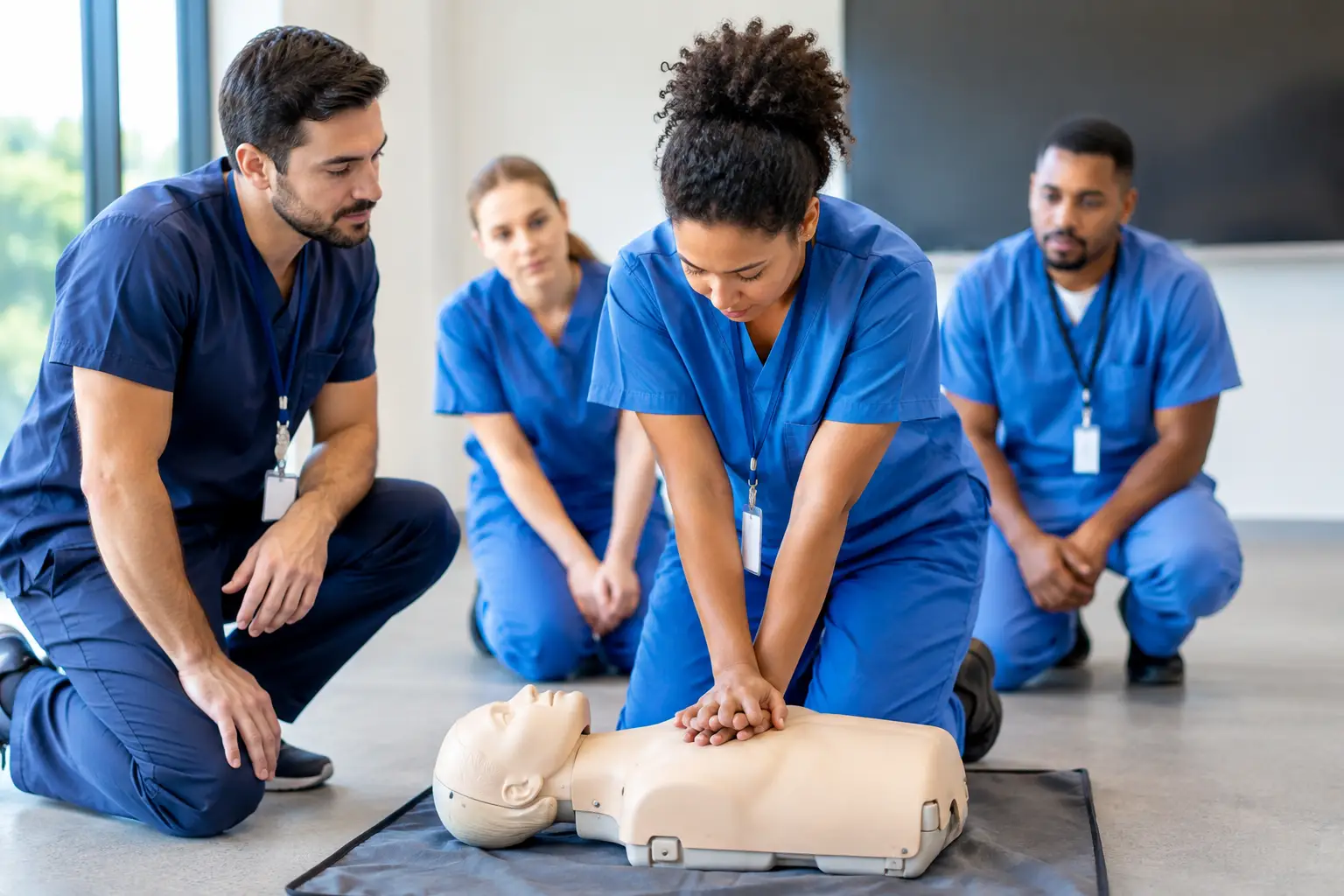
A credential can get you through a hiring checklist. The right training helps you recognize when a patient is declining, step into your role without hesitation, and work effectively with the people beside you. This AHA BLS provider course review looks beyond the completion card to assess what the course teaches, who needs it, and what separates a meaningful class from a rushed certification experience.
What the AHA BLS Provider Course Is Designed to Do
The American Heart Association Basic Life Support, or BLS, Provider Course is built for healthcare professionals and others who may need to respond to cardiac or breathing emergencies as part of their job. That commonly includes nurses, physicians, EMTs, dental professionals, medical assistants, hospital staff, therapists, medical students, and clinical support personnel.
Unlike a general CPR class, BLS focuses heavily on team-based response. A sudden cardiac arrest rarely unfolds as a one-person event in a clinical setting. Participants practice performing high-quality CPR while coordinating roles, using an AED promptly, managing the airway within their scope of practice, and communicating clearly during a resuscitation attempt.
The course typically covers adult, child, and infant CPR; relief of choking; AED use; rescue breathing; and the dynamics of high-performing teams. That broad patient focus matters for professionals who work in family practices, dental offices, pediatric settings, outpatient facilities, and environments where patient populations vary.
For most participants, successful completion earns an American Heart Association BLS Provider Course Completion Card that is valid for two years. Employers and licensing bodies set their own requirements, so it is always wise to confirm that AHA BLS is the credential your role requires before registering.
AHA BLS Provider Course Review: What Works Well
The strongest part of the AHA BLS curriculum is its emphasis on performance, not passive observation. Participants do not simply watch someone demonstrate CPR. They must show that they can recognize an emergency, start compressions quickly, use the correct rate and depth, minimize interruptions, and work through a realistic response sequence.
That hands-on standard is valuable because CPR quality has a direct effect on patient outcomes. The course reinforces details that can be easy to overlook under pressure: allowing full chest recoil, avoiding excessive ventilation, maintaining an effective compression rhythm, and switching compressors efficiently when fatigue becomes a factor.
Team dynamics are another clear advantage. In many real emergencies, delays happen because capable people are unsure who is doing what. BLS training gives participants a common language for assigning tasks, confirming instructions, and speaking up when something needs to change. This is especially useful for medical offices, dental practices, ambulatory centers, schools with health staff, and workplace response teams.
The course also has broad recognition. AHA BLS certification is widely accepted by healthcare employers, schools, clinical programs, and credentialing organizations. For a professional who may change employers, relocate, begin clinical rotations, or add a new role, that recognition can reduce unnecessary complications.
Where the Experience Can Vary
The AHA curriculum establishes the required skills and standards, but the training experience still depends on the instructor, class environment, and amount of individual coaching available. A class can technically meet requirements while still feeling rushed if students have little opportunity to ask questions or correct technique.
A quality instructor should be able to explain why a skill matters, not just tell students where to place their hands. They should watch closely during practice, give direct feedback, and create an environment where a participant can repeat a skill until it is performed correctly. This is particularly important for first-time students, professionals returning after a two-year gap, and anyone who has not used CPR skills in an actual emergency.
Class size can influence the experience as well. Larger classes may be convenient for an employer, but they require enough equipment, assistants, and organized rotations to ensure every student gets meaningful hands-on time. For private groups, on-site programs often work best when the schedule is designed around staffing needs without sacrificing skill practice.
There is also a practical distinction between earning a card and feeling ready to act. No single course can remove every source of stress in a real emergency. The goal is to build sound muscle memory, clinical awareness, and confidence in the first critical minutes. That comes from focused practice and, ideally, regular renewal rather than treating certification as a once-every-two-years obligation.
Instructor-Led or Blended Learning?
The right format depends on your employer’s policy, learning preferences, and schedule. An instructor-led BLS course places the learning and skills evaluation in one classroom session. This format is often a good fit for people who benefit from direct explanation, real-time correction, and group practice.
Blended learning usually combines online coursework with an in-person hands-on skills session. It can be a practical option for busy healthcare professionals who prefer to complete the knowledge portion on their own time. However, the in-person skills session remains essential. CPR, ventilation, AED operation, and team response cannot be learned adequately through a screen alone.
Before selecting either option, verify what your employer accepts. Some organizations have specific requirements for the training format, especially for clinical placements, hospital employment, or professional programs. Choosing the correct pathway at the start prevents the frustration of completing a course that does not meet a workplace policy.
Who Should Take BLS Instead of a General CPR Course?
BLS is generally the right choice when your profession, school program, or employer specifically requires an AHA BLS Provider credential. It is also a sensible option for people who routinely work around patients or need to participate in a coordinated emergency response.
For a parent, coach, teacher, camp counselor, or community volunteer without a healthcare-related requirement, a Heartsaver CPR AED or First Aid/CPR/AED course may be more appropriate. These programs teach lifesaving skills in a format designed for lay rescuers and everyday emergencies.
The difference is not about one course being more valuable than the other. It is about matching the training to the setting where you are most likely to respond. A dental assistant and a youth sports coach may both need CPR knowledge, but their workplace expectations, emergency equipment, and likely role during an incident can be very different.
How to Choose a BLS Class With Confidence
Look first for an authorized program that clearly states the credential offered and whether the course meets AHA BLS Provider requirements. Then consider the practical details: available dates, location, instructor experience, class size, completion-card timing, and whether private or on-site training is available for your organization.
For employers, the best option is rarely just the lowest per-person price. A well-run on-site class can reduce staff travel, simplify scheduling, and provide training that reflects the realities of your workplace. Medical offices and dental practices, for example, may benefit from discussing how an emergency response would work in their own facility, with their own team members present.
For individual students, ask whether the course is suited to initial certification or renewal. A renewal student may move through familiar material more comfortably, while a first-time student may need a little more guidance and practice. If same-day certification is important for a new job, clinical placement, or deadline, confirm eligibility and processing expectations before class.
East Coast Safety Consulting provides practical, professional BLS instruction for healthcare professionals, workplaces, and private groups, with experienced guidance that keeps the focus on usable skills rather than checking a box.
The Bottom Line on BLS Training
This AHA BLS provider course review comes down to a simple point: the course is worth taking when you need a nationally recognized healthcare credential and want practice that reflects the pace and teamwork of a real emergency. Its value is strongest when the instruction is hands-on, the feedback is specific, and the class is matched to your professional requirements.
Choose a training provider that respects your time while taking the skills seriously. When an emergency happens, clear roles, effective CPR, and fast action can give someone their best chance before advanced care arrives.