
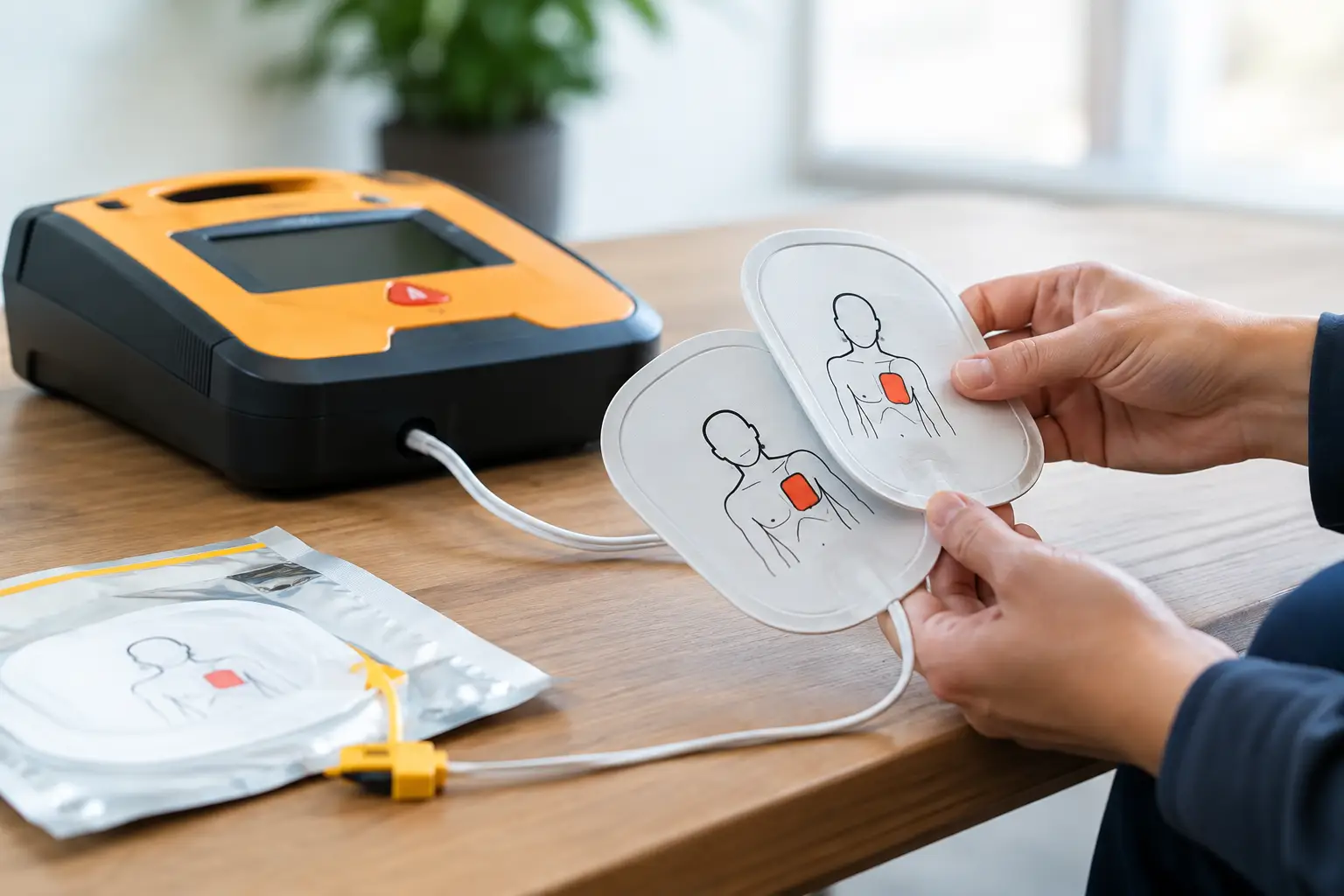
An AED can only help if every part of the unit is ready to work. Knowing when to replace AED pads is one of the simplest and most important steps an employer, school, medical office, gym, or community organization can take to prepare for a cardiac emergency. Pads may look sealed and untouched, but they do not last forever. If they are expired, damaged, missing, or previously used, they may not adhere correctly or deliver therapy as intended.
AED readiness is not complicated, but it does require a routine. A quick inspection now can prevent a critical problem later, when there is no time to search for replacement supplies.
When to Replace AED Pads
AED electrode pads should be replaced by the expiration date printed on the pad package. Most pads have a shelf life of about two to five years, depending on the AED manufacturer and pad type. The date is set by the manufacturer because the adhesive gel can dry out over time, even while the package remains sealed.
Do not wait until the date has passed. Build replacement into your regular AED maintenance schedule so new pads are on hand before the current set expires. For organizations with several AEDs, recording pad expiration dates in one central log makes this much easier.
Pads must also be replaced immediately after they are used during an emergency. Once pads have been removed from their sealed package or applied to a person, they should not be returned to service. Even if the AED did not advise a shock, the pads may have lost adhesion or been exposed to moisture, sweat, blood, medication patches, or other contaminants.
Replace AED pads right away if the package is torn, punctured, unsealed, wet, or visibly damaged. A damaged package can allow air into the pouch and compromise the conductive gel. If you find pads that are curled, dried out, discolored, or difficult to separate from the backing, take the AED out of service until a proper replacement set is installed.
Why Expired AED Pads Are a Serious Concern
AED pads do more than stick to the chest. They allow the AED to analyze the heart rhythm and, when appropriate, deliver a controlled electrical shock. Proper skin contact matters. Pads with dried adhesive may not make a reliable connection, which can interfere with analysis or prevent effective therapy.
During sudden cardiac arrest, responders need to act quickly. CPR should begin immediately, and an AED should be applied as soon as it is available. Discovering that the pads are expired or unusable in that moment creates an avoidable delay.
For workplaces and public-access AED programs, expired pads can also create a compliance and liability concern. A wall-mounted AED sends a reassuring message to employees, customers, families, students, and visitors. That reassurance only means something when the device is maintained according to the manufacturer’s instructions.
Replace Pads After Every Emergency Use
After an AED is used, the unit needs more attention than simply placing it back in its cabinet. Replace the pads, inspect the battery status, confirm the rescue kit is stocked, and check that the device completes its self-test successfully.
The responding staff member, building manager, safety coordinator, or designated AED program lead should document what happened and arrange for replacement supplies promptly. If the AED was involved in a real cardiac arrest, it may also contain event data that emergency medical services, medical directors, or facility leadership may need to review. Follow your organization’s policies and the device manufacturer’s instructions before clearing or returning the unit to service.
It is wise to keep a spare set of compatible pads with every AED. A spare set is especially valuable in schools, athletic facilities, healthcare settings, large workplaces, and locations where the AED could be used on more than one person before supplies can be replenished.
Adult, Pediatric, and Specialty AED Pads
Not every AED pad is interchangeable. Buy pads that are specifically approved for your AED model. Similar-looking pads from another manufacturer may not connect properly, communicate with the AED, or meet the device’s operating requirements.
Many AEDs use adult pads for adults and children age 8 and older or weighing at least 55 pounds. For younger children and infants, pediatric pads or a pediatric setting may be needed, depending on the AED model. Pediatric pads reduce the energy delivered by the device and may use different placement instructions.
If your school, childcare program, sports organization, or community center serves children, confirm that your AED program includes the right pediatric option. Some AEDs use a pediatric key or switch rather than separate pads, while others require pediatric electrode pads. The correct approach depends on the equipment you own.
Certain AED systems also offer specialty pads for trained healthcare professionals or specific clinical uses. These should be selected based on your setting, staff training, and manufacturer guidance. For most public-access locations, standard adult pads plus an appropriate pediatric option are the practical foundation.
A Simple AED Inspection Routine
An AED should be checked on a regular schedule, usually monthly, with a more detailed review whenever the unit is moved, used, or exposed to extreme conditions. Many modern AEDs perform automatic self-tests and display a ready indicator, but that light is not a substitute for a visual inspection.
During each check, verify these essentials:
- The AED status indicator shows that the device is ready for use.
- The electrode pads are present, sealed, compatible with the unit, and not expired.
- A spare set of pads is available when your AED program requires one.
- The battery is installed, within its expiration date, and free of corrosion or damage.
- The rescue kit includes gloves, a CPR mask or face shield, scissors, a razor, and an absorbent towel or gauze.
Record the inspection date, the name of the person completing it, and any action needed. A paper log inside the AED cabinet works well for many smaller organizations. Larger employers, school districts, property management groups, and healthcare facilities may benefit from a digital inspection system that sends reminders before pads or batteries expire.
Do Not Forget the AED Battery
AED pad replacement and battery replacement are separate tasks, but both are necessary for readiness. The AED may display a warning if the battery is low, missing, or nearing expiration. Depending on the model, batteries often last longer than pads, but they still need to be tracked.
A device can look operational on the wall while having an expired pad set or a battery that is close to the end of its life. Checking one without checking the other leaves a gap in your emergency preparedness plan. Review both dates at the same time and order replacements early enough to avoid a lapse in coverage.
If your AED is stored in a vehicle, outdoor cabinet, garage, warehouse, or another location with temperature extremes, inspect it more often. Heat and cold can affect batteries, pad adhesive, and device performance. Follow the manufacturer’s storage recommendations closely.
Who Should Be Responsible for AED Maintenance?
Every AED program needs a clearly identified owner. In a small office, that may be the office manager or practice administrator. In a school, it may be the nurse, athletic director, or facilities coordinator. In a larger organization, responsibility may sit with environmental health and safety, human resources, security, or a designated emergency response team.
What matters is that the task belongs to someone, with backup coverage when that person is away. AED maintenance should not depend on someone happening to notice an expiration date. Assign the responsibility, set reminders, keep replacement information accessible, and train staff on where the AED is located.
Training matters just as much as equipment maintenance. People are more likely to respond quickly when they have practiced CPR and AED skills in a realistic, supportive class environment. They learn how to expose the chest, apply pads correctly, follow the AED’s voice prompts, continue high-quality CPR, and work as a team until emergency medical services arrive.
East Coast Safety Consulting provides CPR, AED, First Aid, and BLS training for individuals and organizations that want practical skills and a stronger emergency response plan. Private and on-site training can also help employers review AED placement, staff roles, and readiness procedures.
An AED is not a decoration or a box to check for compliance. It is emergency equipment that may be needed without warning. Check the pads, track the dates, replace supplies before they expire, and give the people around you the training and confidence to act when a life depends on it.