
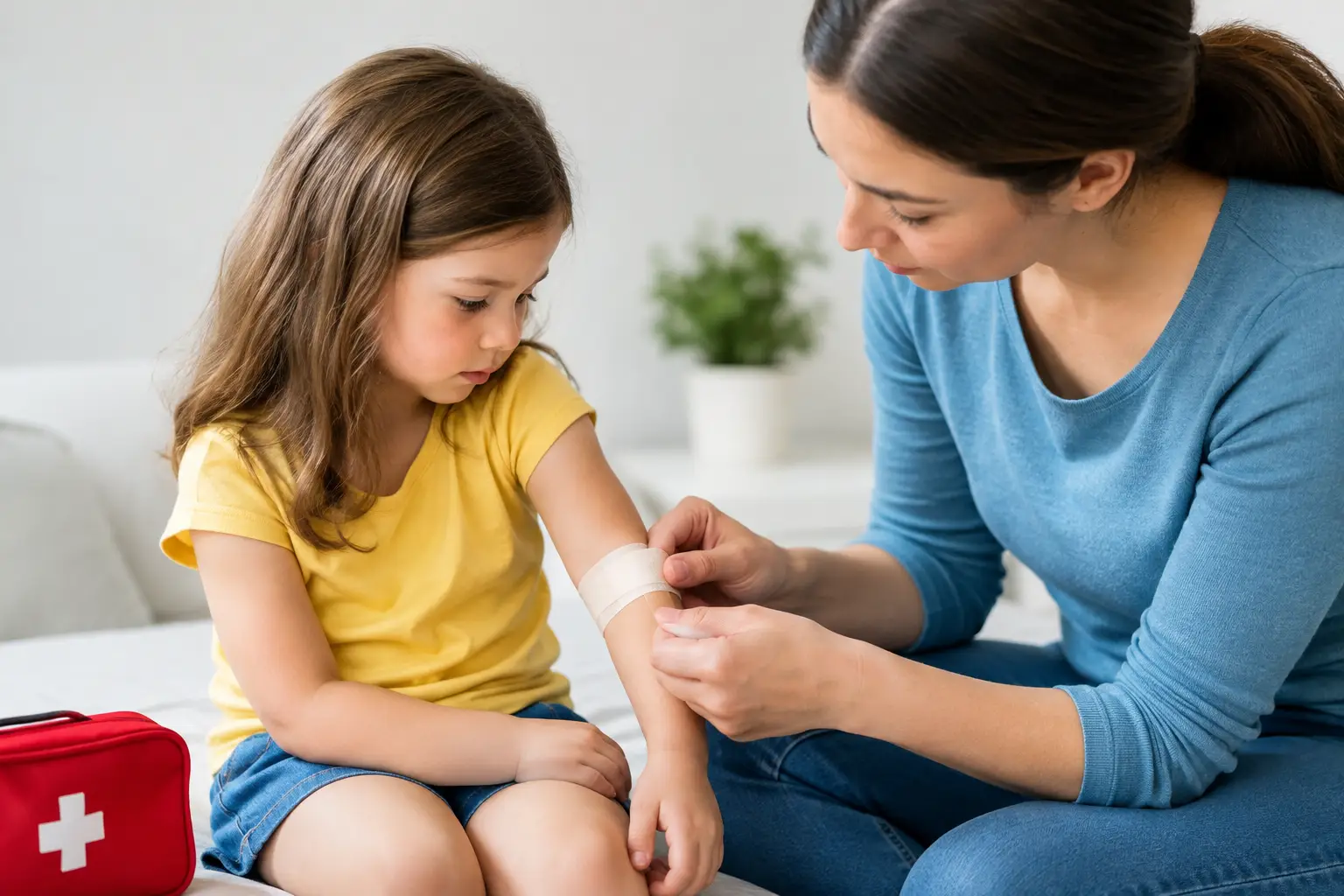
A child can go from laughing on the playground to struggling to breathe in seconds. In that moment, pediatric first aid is not about memorizing medical terminology. It is about recognizing what is happening, staying focused, and taking the right next step until professional help arrives.
For parents, babysitters, teachers, coaches, and childcare teams, preparation creates a calmer response. The goal is not to replace emergency medical care. It is to know when to call 911, how to provide immediate care within your training, and how to protect a child from further harm.
What Pediatric First Aid Covers
Pediatric first aid addresses injuries and sudden illnesses involving infants and children. Children are not simply smaller adults. Their airways are smaller, their symptoms can change quickly, and their ability to explain pain, dizziness, or breathing trouble may be limited by age or development.
A quality course teaches participants how to assess a scene, check a child for responsiveness, recognize life-threatening conditions, and communicate effectively with emergency responders. It also covers common situations such as cuts, burns, allergic reactions, choking, seizures, heat illness, suspected fractures, and head injuries.
The right response depends on the child’s age, symptoms, medical history, and the setting. A scraped knee at soccer practice may need cleaning, a bandage, and parent notification. A child who becomes unusually sleepy after a fall, has trouble breathing, or is not responding normally needs immediate emergency attention.
That judgment is one of the most valuable parts of hands-on training. It helps caregivers separate a minor problem from a situation that cannot wait.
Start With Safety and a Clear Assessment
The first few moments of an emergency can feel chaotic, especially when other children, family members, or bystanders are present. A simple, consistent approach helps prevent missed steps.
First, make sure the area is safe for you and the child. Traffic, water, broken glass, electrical hazards, aggressive animals, and unsafe play equipment can turn one emergency into several. Then check the child’s responsiveness and look for obvious signs of distress, such as severe bleeding, abnormal breathing, bluish or gray skin color, or altered behavior.
If the condition appears life-threatening, call 911 immediately or direct a specific person to call. In a group setting, avoid saying, “Someone call 911.” Point to one person and give a direct instruction. If available, ask another person to bring the first aid kit and AED.
While waiting for help, follow the skills taught in your certification course and the directions provided by the 911 dispatcher. Do not delay calling for help while trying to diagnose the problem yourself. When possible, have the child’s parent, guardian, emergency contact, medication information, and known allergies ready for responders.
Pediatric First Aid Situations That Need Fast Action
Some childhood injuries are common, but common does not always mean minor. Caregivers should know the warning signs that require prompt emergency care.
Breathing Problems and Choking
Trouble breathing is always serious. Watch for gasping, wheezing with visible distress, inability to speak or cry normally, blue or gray lips, retractions around the ribs, or a child who becomes limp or unresponsive.
Choking requires immediate action when a child cannot breathe, cough forcefully, speak, or make normal sounds. The care for an infant differs from the care for an older child, which is why practice with an instructor matters. If a child is coughing effectively, encourage coughing and monitor closely rather than intervening in a way that could worsen the obstruction.
Severe Bleeding and Serious Injuries
Bleeding that will not stop with firm direct pressure, blood that spurts or flows heavily, or an injury involving amputation requires emergency care. Apply direct pressure using a clean dressing or cloth and continue following emergency instructions.
For suspected fractures, avoid trying to straighten the injured area. Keep the child as still and comfortable as possible, support the injury if you can do so safely, and seek medical evaluation. A visible deformity, inability to use a limb, severe pain, or circulation changes below the injury are reasons to act quickly.
Head Injuries and Changes in Behavior
Children fall. Most falls do not become emergencies, but a head injury deserves close observation. Call 911 or seek urgent medical care for loss of consciousness, repeated vomiting, worsening headache, seizure activity, confusion, difficulty walking, unequal pupils, or behavior that is clearly not normal for that child.
Trust your observations. A caregiver who says, “Something is not right,” may be noticing a meaningful change before the child can describe it.
Allergic Reactions, Seizures, and Illness
A severe allergic reaction can involve swelling of the face or throat, widespread hives, breathing difficulty, vomiting, dizziness, or collapse. If a child has been prescribed an epinephrine auto-injector, follow the child’s emergency action plan, your training, and your organization’s policies. Call 911 after use because symptoms can return or worsen.
During a seizure, protect the child from nearby hazards, note the time, and do not restrain them or place anything in their mouth. Call 911 for a first seizure, breathing difficulty, a seizure lasting longer than five minutes, repeated seizures, injury, or failure to regain normal responsiveness.
High fever, dehydration, diabetic emergencies, and heat illness can also become urgent quickly. Confusion, fainting, severe weakness, repeated vomiting, signs of dehydration, or worsening symptoms should never be brushed aside as “just not feeling well.”
Build a First Aid Plan Before You Need It
First aid training works best when it is backed by a practical plan. Families, schools, sports programs, and workplaces that serve children should know who will take charge, who will call 911, who will meet EMS, and who will contact the parent or guardian.
Keep emergency contact information current and accessible. For organizations, that includes medical conditions, allergies, authorized pickup information, and any individualized emergency action plans. Protect this information appropriately, but make sure the people responsible for a child can access it during an emergency.
A well-stocked first aid kit should be easy to locate, regularly checked, and appropriate for the activity. A childcare center, youth sports league, school office, and family vehicle may need different supplies. Medications should be stored and administered only according to applicable policies, parent authorization, and medical direction.
Equipment alone does not create readiness. Staff members and caregivers need to know where supplies are kept and how to use them. Practice also matters. A brief review before a field trip, pool day, or large youth event can identify gaps before they become problems.
Why Hands-On Pediatric First Aid Training Matters
Watching a video can introduce basic concepts, but it cannot replicate the experience of practicing skills under the guidance of an experienced instructor. Hands-on training gives participants a chance to work with infant and child manikins, use training AEDs, practice choking response, ask scenario-based questions, and correct mistakes before an actual emergency occurs.
For parents and caregivers, pediatric First Aid, CPR, and AED training provides confidence at home, in the car, at the park, and while traveling. For childcare providers, schools, camps, medical offices, and youth organizations, training helps support duty-of-care expectations and creates a more prepared team.
Certification requirements vary by employer, licensing body, role, and state. Some positions require a specific nationally recognized curriculum, while others simply expect current pediatric emergency training. Before enrolling, confirm what your employer, school, childcare licensing authority, or organization requires.
East Coast Safety Consulting provides practical American Heart Association and American Red Cross training options for individuals and groups, including private and on-site programs for organizations that need a convenient way to prepare their teams.
A child’s emergency may never happen on your watch. Training still matters, because when it does, a prepared caregiver can recognize the problem, call for help without hesitation, and give that child the strongest possible start to recovery.
Leave a Reply