
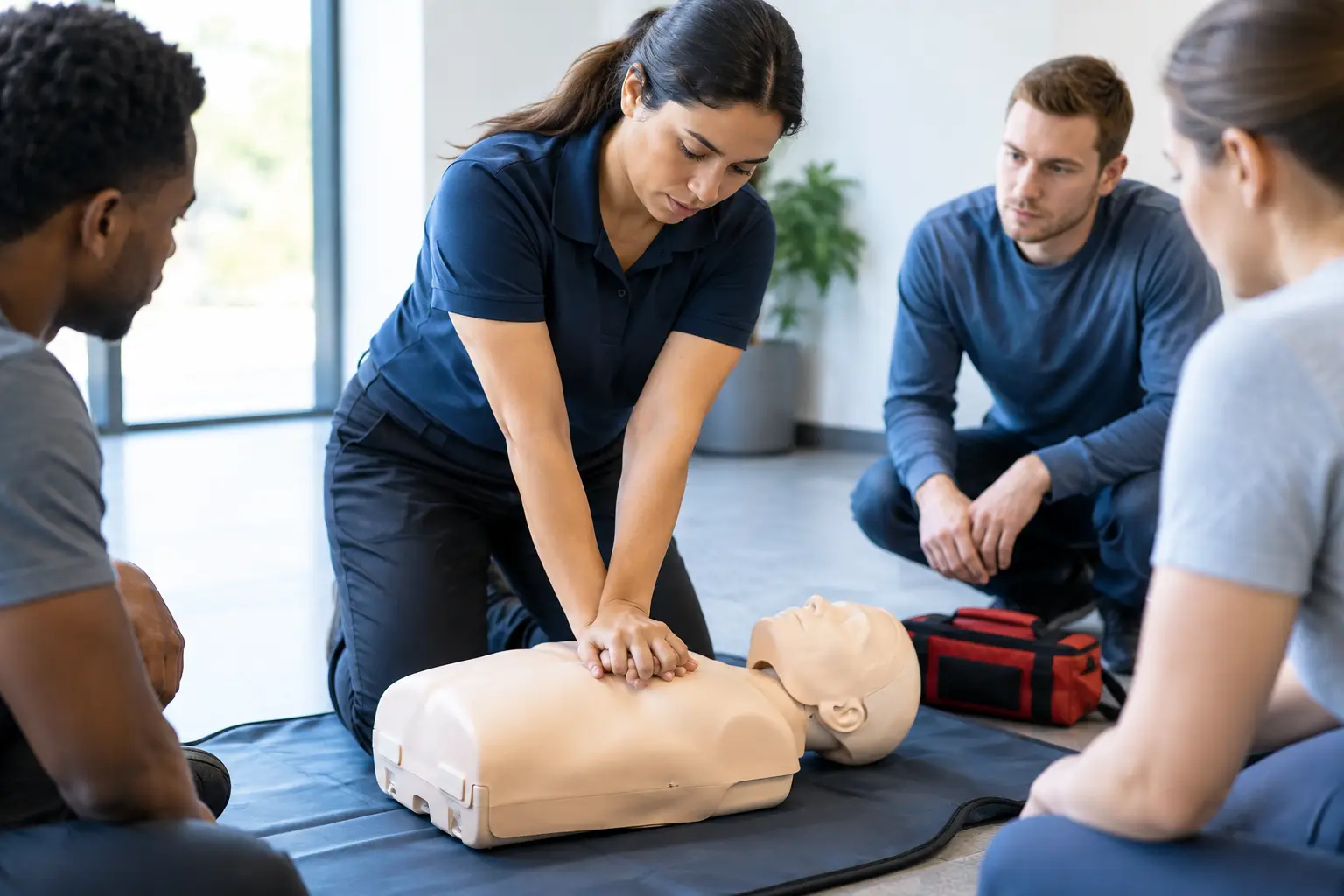
A BLS course review should look beyond whether a class was quick, convenient, or easy to book. For healthcare professionals, Basic Life Support training is preparation for the moment a patient collapses, a breathing emergency develops, or a team must respond without delay. The right course builds usable skills, reinforces current protocols, and gives you confidence to perform under pressure.
For many students, BLS certification is required for a job, clinical placement, license, or employer policy. That requirement matters, but the quality of the training matters just as much. A card confirms completion. Effective instruction helps you recognize an emergency, begin high-quality CPR, use an AED correctly, and work efficiently with others when seconds count.
What a BLS Course Should Actually Teach
BLS is designed for healthcare providers and other trained personnel who may respond to cardiac and respiratory emergencies in a professional setting. It goes beyond a basic awareness-level CPR class by emphasizing team response, clinical judgment within the scope of the course, and consistent performance of lifesaving skills.
A strong program should give students time to practice adult, child, and infant CPR techniques when those components are part of the selected curriculum. Students should also learn how to use an AED, deliver effective ventilations, respond to choking, and recognize the priorities of a rapid, organized response. Team dynamics are a central part of BLS because real emergencies rarely involve one responder working in isolation.
The course should not feel like a lecture followed by a rushed skills check. CPR quality depends on correct hand placement, appropriate compression depth and rate, full chest recoil, minimal interruptions, and timely use of available equipment. These details are hard to learn by watching a video alone. Students need hands-on practice and timely correction from an instructor who is paying attention.
BLS Course Review: The Signs of Quality Instruction
When reviewing BLS options, start with the credential your employer, school, hospital, or licensing organization requires. Some workplaces specify an American Heart Association BLS Provider course, while others accept a qualifying American Red Cross program. Do not assume every CPR course meets a healthcare BLS requirement. Confirm the accepted provider before registering, especially if a job offer, clinical deadline, or renewal date is approaching.
Once you know the required credential, evaluate how the class is delivered. A quality BLS course has enough time for students to practice, ask questions, and receive meaningful coaching. The instructor should explain not only what to do, but why a particular action affects patient care and team performance.
Look for an instructor who keeps the room focused without making students feel uncomfortable. Healthcare professionals arrive with different levels of experience. A new medical assistant may need more guidance with bag-mask ventilation, while an experienced nurse may benefit most from refining team communication and reducing pauses in compressions. Effective instructors meet students where they are while holding everyone to the same performance standard.
Equipment also shapes the learning experience. Manikins, AED training devices, masks, and other training materials should be clean, functional, and appropriate for the skills being taught. Students should have repeated opportunities to perform the sequence themselves rather than waiting in a long line for a single turn. Practice creates familiarity, and familiarity can reduce hesitation during a real emergency.
Why Hands-On Feedback Matters
Many people renew BLS every two years and assume the course will be routine. Yet even experienced providers can develop habits that reduce CPR quality. Compressions may become too shallow, ventilation may be delivered too quickly, or a responder may lose time during a role transition. A useful BLS class identifies these gaps before they become a problem at work.
Feedback should be specific. Rather than saying, “Try that again,” an instructor should point out what needs to change: allow full recoil, keep interruptions shorter, position the mask more securely, communicate the next role clearly, or begin the AED process sooner. Small adjustments can make a major difference in how well a team performs.
Scenario-based practice is especially valuable. It gives students a chance to think through the sequence of actions while communicating with a partner. Who begins compressions? Who retrieves the AED? When should rescuers switch? How can the team prepare for ventilation without creating long pauses? The goal is not to memorize a script. It is to develop a calm, coordinated response that follows the current course standards.
Convenience Is Valuable, but It Is Not the Whole Review
Busy healthcare professionals need flexible scheduling. Evening, weekend, and on-site options can make it easier to stay current without disrupting patient care or work responsibilities. Same-day certification can also be helpful when an employer or clinical program needs documentation quickly.
Those benefits are real, but speed should never replace skill practice. A short class can be appropriate when students have completed required online work before attending an in-person skills session. It may be less useful if the format leaves little room to practice, ask questions, or demonstrate competency. The right format depends on your employer’s requirements, your previous experience, and whether you learn best through self-paced material or live instruction.
Private group training is often a practical choice for medical offices, dental practices, schools, clinics, and workplace teams. Training together allows coworkers to practice communication and role assignments in a familiar group. It can also simplify compliance planning by helping an organization keep staff certifications on a similar renewal schedule.
Questions to Ask Before You Register
A few direct questions can prevent the wrong course from creating delays later. Confirm the certifying organization, course name, expected completion time, and whether the class includes the required in-person skills evaluation. Ask when your digital certification will be issued and whether the course meets the specific requirement of your employer or school.
It is also reasonable to ask about class size. A smaller or well-managed class often gives students more chances to practice and receive coaching. Larger classes are not automatically poor, but they must be structured carefully so every participant completes the required skills without feeling rushed.
If you are renewing after time away from clinical work, tell the training provider. If you are a new hire facing a deadline, mention that as well. A professional training team can help you select the appropriate course and understand what to bring, how long to plan for, and when to expect your certification.
What Students Should Take Away From BLS Training
The best BLS course does more than satisfy a checklist. Students should leave knowing how to recognize cardiac arrest, activate the emergency response system, begin effective care, use available equipment, and contribute productively to a team. They should understand that high-quality CPR is not a single action but a series of disciplined choices made quickly and correctly.
They should also leave with the confidence to act. Confidence does not mean assuming every emergency will be simple. It means having practiced the fundamentals enough that the first steps are clear when stress is high. That is the purpose of certification training for nurses, physicians, dental professionals, EMTs, medical assistants, students, and other healthcare team members.
East Coast Safety Consulting delivers practical, instructor-led BLS training for professionals and organizations that need recognized certification and real-world readiness. With experienced instruction, hands-on practice, and scheduling options for individuals and groups, the focus stays where it belongs: helping responders stay sharp and prepared.
Your next BLS class may be required for work, but it can also be a chance to strengthen the skills a patient may depend on. Choose training that gives you more than a completed card – choose training that prepares you to step in, work with your team, and act with purpose.