
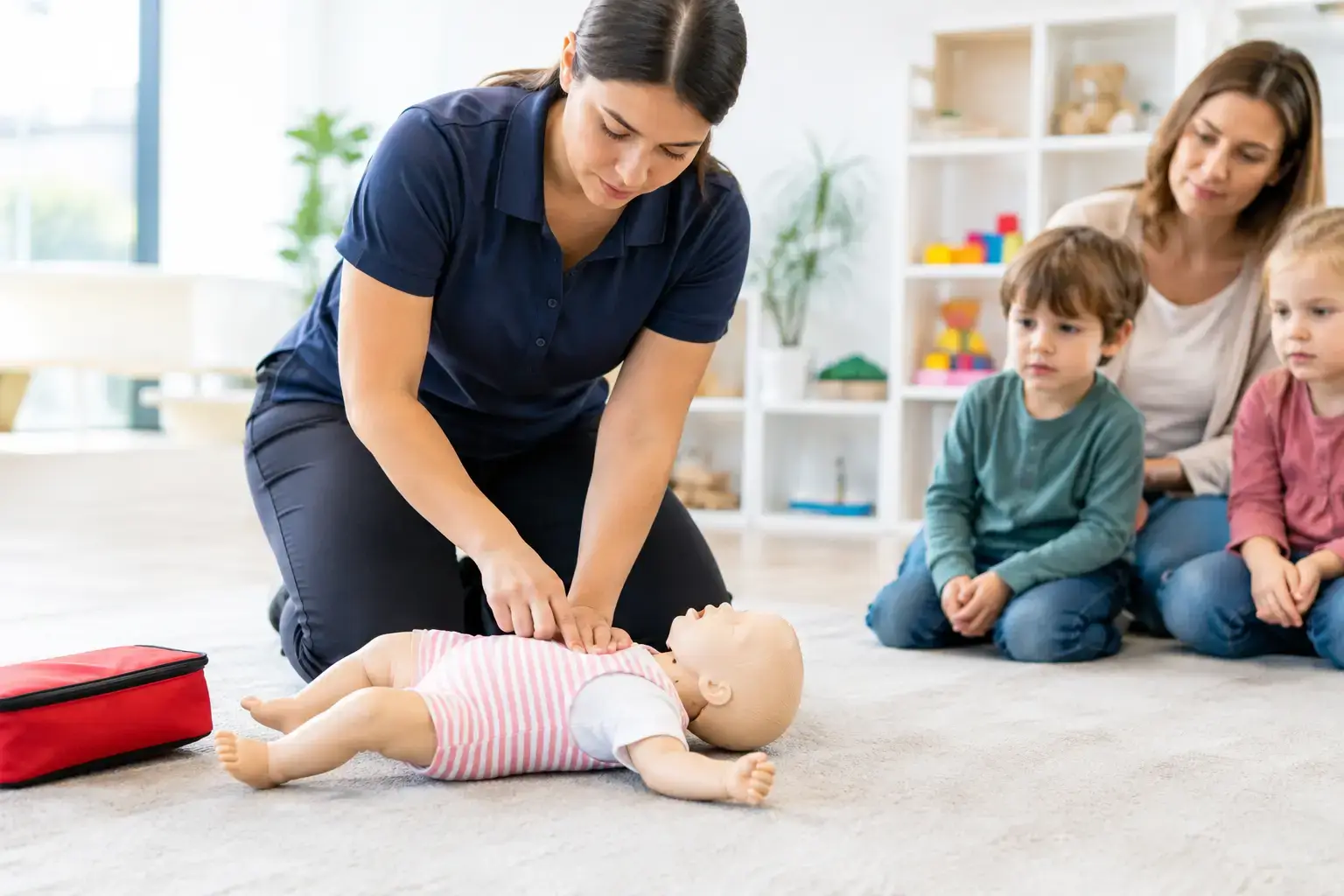
When a child stops breathing, chokes, or becomes unresponsive, a caregiver’s first actions matter long before EMS arrives. That is why childcare CPR requirements are more than a licensing item to check off. They help ensure the adults entrusted with children can recognize an emergency, act quickly, and provide appropriate care for an infant or child.
For center directors, family child care providers, preschool staff, camp leaders, and babysitters, the exact rules can vary. State licensing agencies, local regulations, employer policies, and the age of the children in care may all affect what training is required. The practical goal, however, stays the same: have qualified people on site who can respond confidently during the moments when children need help most.
Why Childcare CPR Requirements Vary
There is no single national rule that applies to every childcare setting. Most licensed centers and home-based programs must follow the requirements set by their state child care licensing authority. Those rules often address who needs training, which credentials are accepted, how often certification must be renewed, and whether First Aid and AED instruction are also required.
A large center may need a specified number of certified staff members available throughout every operating hour. A family child care provider may be required to maintain their own current certification, along with a plan for substitutes or assistants. Schools, camps, faith-based programs, and after-school organizations may have additional policies based on their governing body, insurer, or school district.
Before scheduling a course, review your current licensing standards and any requirements from your employer or program administrator. Do not assume that an adult-only CPR card, an online-only certificate, or an expired credential will meet the standard. If your organization serves infants and children, the training should clearly cover pediatric emergencies.
What a Childcare CPR Course Should Cover
The right course prepares caregivers for the emergencies most likely to occur around young children. Pediatric CPR is not simply adult CPR taught at a smaller scale. Assessment techniques, rescue breathing, compression methods, choking response, and considerations for an infant differ from those used for an adult.
A quality childcare-focused course should provide hands-on practice with infant and child manikins. Participants should practice recognizing cardiac arrest, giving high-quality CPR, using an AED when appropriate, and responding to conscious and unconscious choking. Training should also address scene safety, calling 911, and working effectively with another caregiver while children remain supervised.
For most childcare professionals, pediatric First Aid is equally valuable. Falls, allergic reactions, seizures, burns, bleeding, heat illness, and sudden illness may require immediate attention even when CPR is not needed. First Aid instruction helps staff make sound early decisions, provide care within their training, and communicate clearly with emergency responders and parents.
Many providers choose a combined Adult and Pediatric First Aid/CPR/AED course because staff can experience emergencies involving coworkers, parents, or visitors as well as children. Whether adult skills are required depends on your licensing rules and workplace policy, but the broader preparation is often a practical choice.
Hands-on skills matter
Some employers and licensing authorities will not accept a course completed entirely online because participants have not demonstrated skills in person. A blended-learning format may be accepted when it includes online coursework followed by an instructor-led, in-person skills session. The key is to verify the accepted format before enrolling.
Nationally recognized programs from the American Heart Association or American Red Cross are commonly accepted, but acceptance is determined by the agency, employer, or program reviewing the credential. Keep the course name and completion card available so you can confirm that it includes the required pediatric components.
Who Should Hold Current Certification?
A safe program does not rely on one certified employee whose shift ends at 3:00 p.m. Childcare emergencies can happen during arrival, outdoor play, meals, nap time, field trips, and closing. Directors should plan coverage around real staffing schedules, breaks, vacations, absences, and turnover.
In many settings, all teachers, assistants, directors, and regular caregivers should be trained, even if regulations only require a smaller number. This reduces the risk of having no qualified responder immediately available in a classroom or on a playground. It also builds a stronger team response when one person calls 911, another begins care, and another supervises the remaining children.
People who may benefit from current pediatric certification include:
- Childcare center directors, teachers, aides, and float staff
- Family child care providers and their approved assistants
- Preschool, pre-K, and after-school program staff
- Camp counselors, youth coaches, and activity leaders
- Nannies, babysitters, and relatives who provide regular care
For babysitters and young caregivers, training should be age-appropriate and paired with practical childcare education. Babysitter training can teach safe supervision, feeding basics, behavior management, emergency communication, and how to respond when a child gets sick or injured. Adding pediatric First Aid, CPR, and AED certification gives families greater confidence in a sitter’s ability to act during an emergency.
Certification Renewal and Recordkeeping
CPR skills fade when they are not used. Most CPR and First Aid certifications are valid for two years, although your state, employer, or certifying organization may set different renewal expectations. Waiting until a card expires can create a staffing problem, especially when several employees need training at once.
A simple tracking system prevents last-minute issues. Keep a roster that lists each staff member’s course, completion date, expiration date, and card or certificate information. Review it monthly and schedule renewals well ahead of expiration. New hires should be included in the process immediately, particularly if they will be counted toward required staff coverage.
Your records should be easy to produce during a licensing visit or internal audit. Digital copies are useful, but it is wise to know how records will be accessed if the director is away or systems are temporarily unavailable. Training documentation should support your emergency preparedness plan, not sit in a folder until inspection day.
Training Is One Part of Emergency Readiness
Current certification is essential, but a card alone does not make a childcare program emergency-ready. Staff should know where first aid supplies, AEDs, emergency contacts, medications, attendance records, and evacuation materials are kept. They should also understand who calls 911, who meets responders, and who stays with the other children.
Practice makes those responsibilities clearer. Short emergency drills and staff discussions can reveal gaps that are easy to miss on paper. For example, is the AED accessible when the building is locked? Can staff quickly locate a child’s allergy action plan? Who brings the sign-in sheet outside during an evacuation? These details affect how well a team performs under pressure.
Programs should also establish a clear policy for notifying parents after an injury or medical event. Staff need to document what happened, what care was provided, when emergency services were contacted, and what information was shared. Good documentation supports continuity of care and demonstrates a professional, prepared response.
Choosing Training That Fits Your Program
The best course is one that satisfies your regulatory requirements while giving caregivers realistic practice. Look for instruction that is led by an experienced instructor, includes the appropriate infant and child skills, and provides clear certification documentation. For a center or school, private on-site group training can reduce scheduling challenges and allow the instructor to tailor scenarios to the team’s work environment.
Public classes may be a convenient option for individual caregivers, nannies, or small programs. Either way, ask whether the course includes adult and pediatric First Aid, CPR, and AED training; whether hands-on skills testing is included; and how quickly completion credentials are issued. Those answers can matter when an employee needs certification for a new position or a licensing deadline.
East Coast Safety Consulting provides practical American Heart Association and American Red Cross training options for childcare teams, caregivers, and families seeking pediatric emergency skills. The focus is not just on earning a credential, but on helping participants leave class ready to recognize an emergency and respond.
A child may never need CPR in your care, and that is the outcome everyone wants. But maintaining the right training, coverage, and emergency plan means that if a critical moment arrives, the people closest to that child are prepared to help.
Leave a Reply