
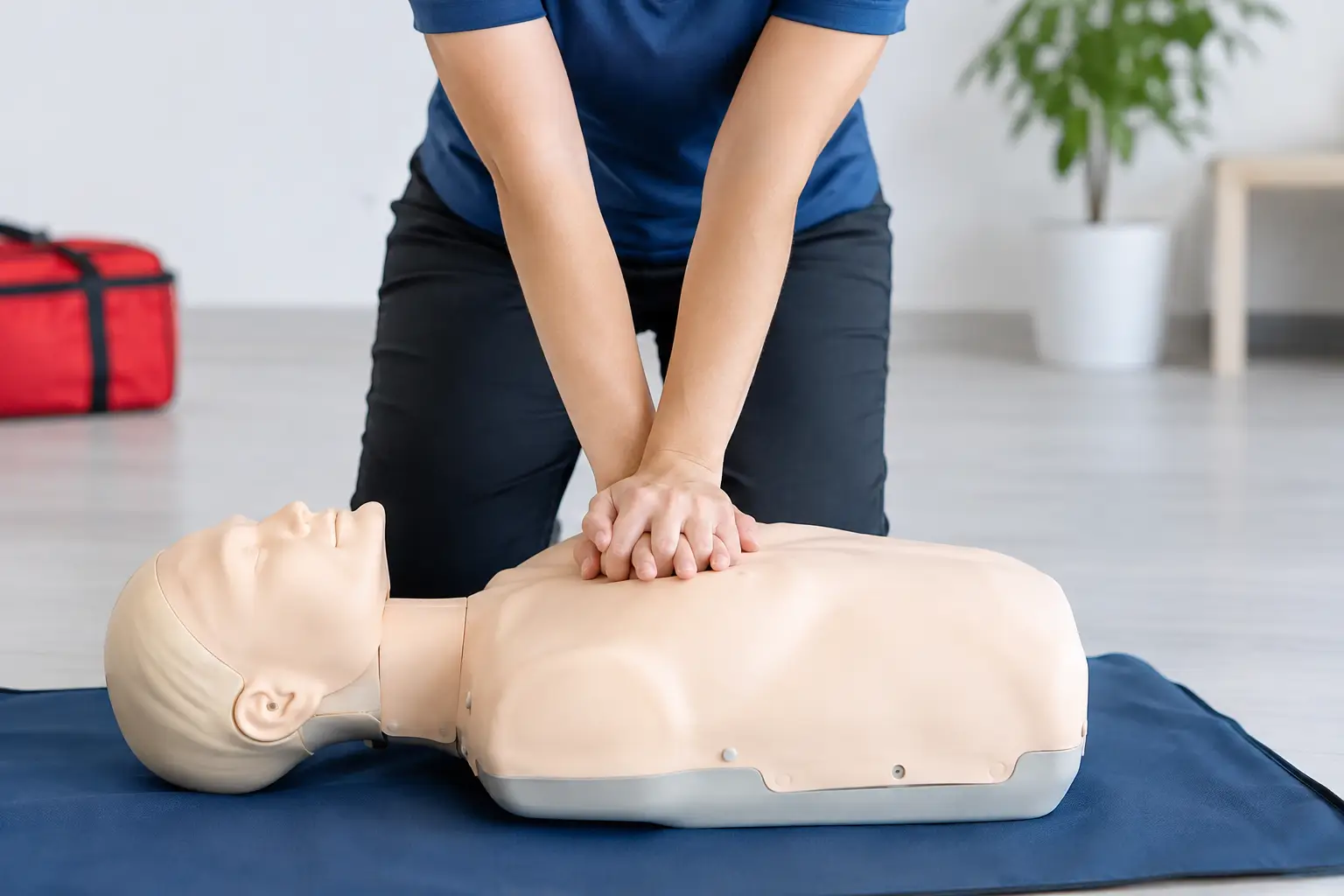
A CPR card represents more than course attendance. It shows that you completed the education and hands-on practice required by a recognized training organization. So, does CPR certification require testing? In most nationally recognized CPR courses, yes. You should expect an instructor to evaluate your practical skills, and some course types also include a written exam or online knowledge assessment.
The exact testing process depends on the course, the certifying organization, and why you need the credential. A healthcare professional renewing BLS has different requirements than a parent learning CPR for the first time. Understanding the difference before you register helps you choose a course your employer, school, licensing board, or organization will accept.
Does CPR Certification Require Testing in Every Course?
For most American Heart Association and American Red Cross CPR certification programs, participants must demonstrate that they can perform the required skills correctly. This is not designed to be intimidating. It is a practical confirmation that you can respond effectively when someone is unresponsive, not breathing normally, choking, or in cardiac arrest.
Skills testing commonly includes adult CPR, AED use, and choking response. Depending on the course, it may also include child and infant CPR, pediatric choking response, rescue breathing, or two-rescuer scenarios. Your instructor watches for the steps that make CPR effective: checking the scene, recognizing the emergency, calling for help, delivering quality compressions, using an AED promptly, and continuing care until help arrives.
Many entry-level CPR and First Aid courses focus primarily on these hands-on evaluations. A formal, proctored written test may not be required in every lay-responder course, although online knowledge checks, lesson quizzes, and instructor review are common. The course completion requirements are set by the training organization, not by an individual instructor.
Healthcare-level courses are often more demanding. For example, BLS Provider training typically includes a written exam as well as multiple hands-on skills evaluations. Students must show that they can perform high-quality CPR, work as part of a resuscitation team, use a bag-mask device, and respond appropriately in adult, child, and infant emergencies.
What CPR Testing Usually Looks Like
CPR testing is generally straightforward when you have participated in the course and practiced the skills. Instructors demonstrate each technique, give participants time to practice, and offer corrective coaching before a final skills check. The goal is competence, not catching someone off guard.
During a practical evaluation, you may be asked to respond to a brief scenario using a manikin and training AED. You could be assessed on compression depth and rate, chest recoil, hand placement, ventilation technique when applicable, and the order in which you perform key emergency steps. In group courses, you may also practice communicating with another rescuer and switching compressors to reduce fatigue.
If your course includes First Aid, you may complete scenario-based practice rather than a traditional written exam. This can involve identifying the right response to bleeding, allergic reactions, seizures, heat illness, or other common emergencies. The format varies, but the purpose stays the same: ensuring you can apply what you learned.
A good instructor gives clear feedback. If you need to adjust your hand placement, slow down, speed up, or improve your technique, you should be given an opportunity to correct it. Lifesaving education should build confidence through practice, not leave students worried about making a small mistake.
BLS testing for healthcare professionals
BLS certification is commonly required for nurses, physicians, EMTs, dental professionals, medical assistants, allied health students, and others who work in clinical settings. Because BLS includes team dynamics and healthcare-specific resuscitation skills, testing is more structured than in many community CPR classes.
Expect both cognitive and psychomotor components. The cognitive portion confirms that you understand current resuscitation principles. The skills portion confirms that you can perform them under realistic conditions. Employers and clinical programs often require this level of certification because a card alone is not enough if the provider cannot apply the skills in an emergency.
Heartsaver, CPR/AED, and First Aid testing
Heartsaver and similar community-based programs are appropriate for workplace teams, teachers, coaches, parents, caregivers, fitness professionals, and community members. These courses still require active participation and successful skills performance when certification is issued.
The written-testing requirement may be different from BLS. If you need certification for a job, ask your employer whether they require a specific course such as Adult and Pediatric First Aid/CPR/AED, whether a blended-learning format is acceptable, and whether they require American Heart Association or American Red Cross certification. Getting the right answer before class prevents avoidable delays.
Are Online CPR Tests Enough for Certification?
An online CPR course can be useful for learning the material, completing the knowledge portion of blended learning, or refreshing your understanding of emergency response. However, an online test by itself is often not enough for a certification card that employers recognize.
CPR is a physical skill. You need to practice compressions on a manikin, learn how an AED trainer works, and receive feedback on technique. For that reason, many recognized blended-learning programs require two parts: online coursework followed by an in-person skills session with an authorized instructor.
Be cautious with courses that promise a CPR certification card with no hands-on component. Some may be acceptable for personal education, but they may not meet workplace, school, healthcare, daycare, or licensing requirements. The issue is not whether online learning has value. It does. The issue is whether the credential satisfies the standard you need.
Before enrolling, confirm four details: the issuing organization, the exact course name, whether an in-person skills session is included, and whether your employer accepts the card. This matters especially for healthcare professionals, childcare providers, school staff, and employees whose certifications are reviewed during audits or onboarding.
What Happens If You Do Not Pass the First Time?
Most students who attend class, participate, and practice carefully complete their certification successfully. Still, it is normal to need extra coaching on a skill. Compressing at the proper rate, allowing full chest recoil, coordinating breaths, or remembering the steps in a scenario can take practice.
If you struggle during testing, tell the instructor. A qualified instructor can explain what needs improvement and provide an opportunity to practice again within the policies of the certifying organization. Do not treat the evaluation as a reason to avoid CPR training. Training is where you learn to replace hesitation with a clear, practiced response.
For organizations scheduling private or on-site training, this is one reason instructor-led classes are valuable. Employees can ask questions relevant to their workplace, practice as a team, and receive direct feedback rather than trying to learn a hands-on skill entirely alone.
How to Prepare Without Overthinking It
You do not need a medical background to do well in a CPR class. Arrive ready to participate, wear comfortable clothing, and give yourself enough time to stay for the full course. Pay close attention during demonstrations, practice the sequence out loud if it helps you remember it, and ask questions when a step is unclear.
If you are renewing a certification, avoid assuming that the process will be exactly the same as your last class. Guidelines, course materials, and employer expectations can change. Treat renewal as a chance to sharpen skills that may be needed only once but could make an immediate difference.
East Coast Safety Consulting provides practical, instructor-led American Heart Association and American Red Cross training for individuals, workplaces, and community groups. Whether you need BLS, CPR/AED, First Aid, or pediatric emergency training, choosing the proper course format helps ensure your certification meets the requirement behind it.
The test is not the point of CPR training. The point is being ready to recognize an emergency, take action quickly, and give another person their best chance before professional help arrives.
Leave a Reply