
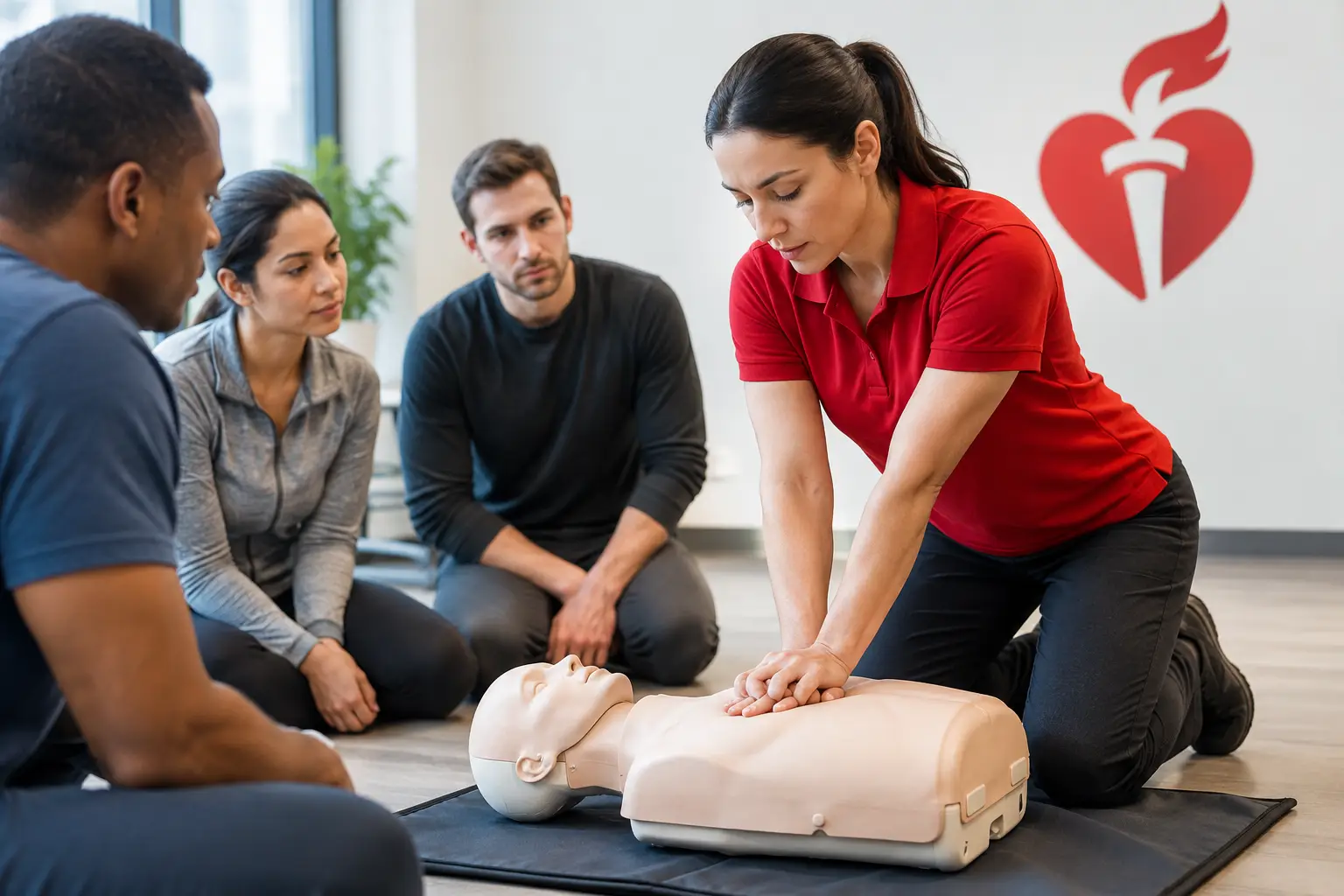
A CPR card may meet a job requirement. The ability to teach someone else how to recognize cardiac arrest, use an AED, or perform high-quality compressions carries a different level of responsibility. American Heart Association instructor certification is designed for qualified professionals and educators who want to lead evidence-based lifesaving courses while giving students practical confidence when seconds matter.
For some candidates, becoming an instructor supports a growing training business. For others, it creates a valuable service for a medical office, school, fitness center, community organization, or workplace. The right path depends on the course you plan to teach, your current credentials, and the Training Center that will support you after the instructor course is complete.
What American Heart Association Instructor Certification Means
American Heart Association instructor certification qualifies an individual to teach specific AHA programs under the alignment of an authorized AHA Training Center. It is not one universal credential that automatically permits a person to teach every AHA course. Instructors are approved in disciplines such as BLS, Heartsaver, or other eligible programs, and each discipline has its own audience, equipment needs, course materials, and teaching expectations.
A BLS Instructor typically teaches healthcare professionals, including nurses, medical assistants, dental teams, EMS personnel, and clinical staff. BLS courses focus on high-quality CPR, team dynamics, ventilation, and AED use in professional response settings.
A Heartsaver Instructor generally teaches lay rescuers and workplace audiences. That can include teachers, coaches, parents, childcare staff, office employees, security personnel, and community volunteers. The skills are lifesaving in either setting, but the delivery, student expectations, and course options may differ.
The credential matters because AHA courses follow standardized science-based curriculum and evaluation requirements. An instructor is responsible for presenting the required material accurately, creating a supportive learning environment, evaluating skills fairly, and maintaining course records according to current program policies.
The Typical Path to Becoming an AHA Instructor
The process has clear steps, but the details should be confirmed with the Training Center you intend to join. Requirements and accepted pathways can vary by discipline and current AHA policy.
Start With the Right Provider Credential
Before pursuing instructor status, candidates generally need a current provider card in the discipline they want to teach. Someone pursuing BLS Instructor certification should hold a current BLS Provider credential. A candidate planning to teach Heartsaver courses should hold the applicable Heartsaver provider credential.
This requirement is more than paperwork. Instructor candidates should already be comfortable performing the skills they will demonstrate, explaining why each step matters, and receiving feedback without becoming defensive. A strong instructor does not simply read from a course video or slide deck. They can correct technique clearly and calmly while keeping students engaged.
Connect With a Training Center Before You Enroll
Instructor candidates need alignment with an AHA Training Center. This is one of the most important decisions in the process, especially for candidates who plan to teach independently or build a training business.
A Training Center provides the structure behind the course. Depending on the relationship, it may offer instructor onboarding, policies, course monitoring, card processing, equipment guidance, class-management resources, and ongoing answers when unusual situations arise. The lowest-cost option is not always the best option if it leaves a new instructor without reliable support after certification.
Ask practical questions before committing: Which disciplines can you teach? What are the alignment expectations? How are courses submitted? Is administrative support available? What costs apply to course processing, materials, or renewals? Will you have access to help when a student, employer, or class situation requires guidance?
Complete Instructor Essentials and the Instructor Course
Instructor candidates complete the required AHA Instructor Essentials education and attend an instructor course for their discipline. These programs focus on more than CPR skills. Candidates learn how to use AHA course materials, set up a classroom, manage practice sessions, conduct skill evaluations, and follow required policies.
Expect to practice teaching, not just watching. Candidates may be asked to demonstrate skills, lead a portion of a lesson, respond to student questions, and show that they can use manikins, AED trainers, barrier devices, and course materials correctly. The best preparation is to arrive with strong provider-level skills and a willingness to be coached.
Complete Your Monitoring Requirement
After the instructor course, new instructors must complete a monitored teaching experience within the required timeframe. During this process, an experienced instructor or Training Center representative observes the new instructor teaching an actual course or assigned course segment.
Monitoring protects students and instructors alike. It confirms that the instructor can manage the room, teach the curriculum accurately, maintain appropriate pacing, evaluate performance consistently, and handle common classroom challenges. It is also a valuable opportunity to ask questions before teaching alone.
Choosing Between BLS and Heartsaver Instructor Training
The right discipline should match the people you expect to serve. Candidates sometimes pursue both, but starting with the program closest to their audience can make the first year more manageable.
Choose BLS Instructor training if you work with or plan to serve healthcare teams. This is often the right fit for clinical educators, EMS professionals, experienced healthcare providers, and entrepreneurs working with medical offices, hospitals, dental practices, or allied health programs.
Choose Heartsaver Instructor training if your audience is primarily workplaces and community groups. Employers, schools, youth programs, faith communities, property teams, fitness organizations, and childcare settings often need CPR, AED, and First Aid education for non-healthcare responders.
There is no one-size-fits-all answer. A nurse with a large healthcare network may benefit from BLS first, while a safety professional serving local businesses may see more immediate demand for Heartsaver programs. Your Training Center can help you evaluate which path aligns with your experience and market.
What Separates a Capable Instructor From a Card Issuer
Students remember how an instructor made them feel during their first CPR class. If they leave embarrassed, confused, or rushed, they may hold a card but hesitate in a real emergency. If they leave having practiced, asked questions, and received useful correction, they are more likely to act.
That difference comes from preparation. A capable instructor checks equipment before class, knows the current course requirements, gives concise demonstrations, and protects enough time for meaningful hands-on practice. They also understand that not every student learns the same way. A healthcare professional may want to know the clinical reasoning behind a sequence, while a parent may need simple, direct instruction they can recall under stress.
Professionalism also includes firm boundaries. Certification should reflect demonstrated participation and required skills, not attendance alone. Courses should never be shortened beyond program requirements just to fit a busy schedule. Protecting the integrity of the class protects the people who may depend on those students later.
Building a Sustainable CPR Training Practice
Instructor certification can be the start of a rewarding business, but the credential itself is only one part of the operation. New instructors should consider who they will serve, where classes will be held, how they will manage equipment, and how they will keep records organized.
Private group courses can be a strong fit for employers, medical offices, schools, and community organizations because training can be scheduled around the group’s needs. Public classes can help reach individuals who need a credential for work, school, volunteering, or personal preparedness. Both models require dependable communication, appropriate equipment, accurate course administration, and a consistent student experience.
It is also wise to plan for recurring work rather than relying only on one-time classes. Organizations often need renewal training, onboarding sessions for new staff, or additional programs such as First Aid and AED education. Building trust through responsive service and quality instruction is more valuable than chasing a high volume of poorly supported classes.
Support After Certification Matters
New instructors often discover that their first questions arise after they are certified. A client may request a private class for an unusual group size. A student may need clarification about an eCard. An instructor may need help selecting equipment or understanding an updated policy.
That is why alignment should be viewed as a professional relationship, not merely a required affiliation. East Coast Safety Consulting supports AHA instructors with certification pathways, guidance, class-management resources, and practical help for instructors building or expanding their training businesses nationwide.
Whether you want to teach BLS to healthcare teams, deliver workplace CPR and First Aid courses, or create a local training business, start with a program and Training Center that will hold you to a high standard while helping you grow. The goal is not simply to issue certifications. It is to prepare more people to respond with skill, composure, and purpose when help is needed most.