
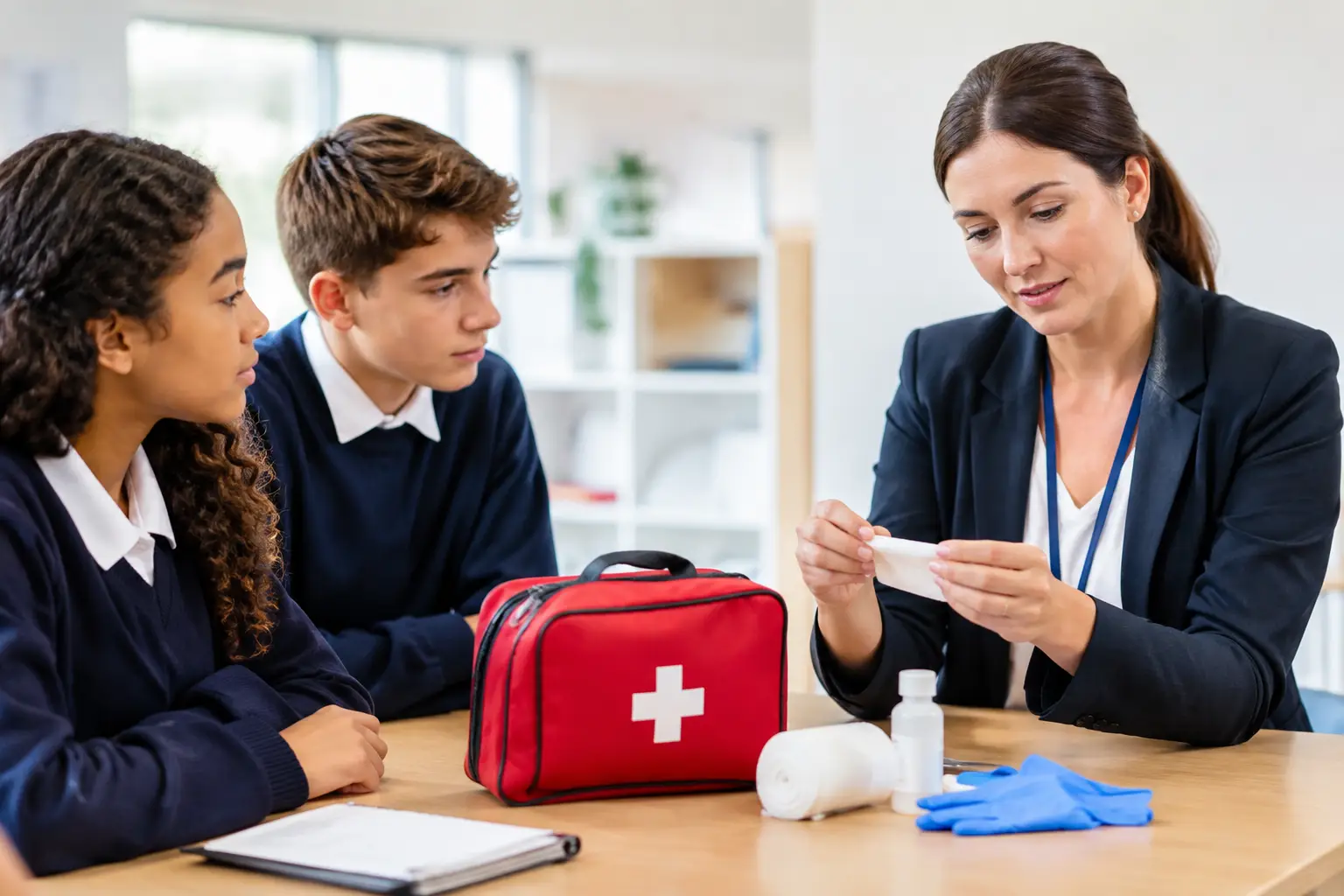
A student falls on the playground, a teacher has chest pain during dismissal, or a child experiences a severe allergic reaction in the cafeteria. In those first minutes, a school’s preparation matters more than the label on a first aid kit. This school first aid compliance guide helps administrators, school nurses, childcare directors, and activity leaders build a program that is ready for real emergencies, not just a binder that looks complete during an inspection.
Compliance is not one national checklist. Requirements can vary by state, district, school type, licensing authority, grade level, and the activities your students participate in. A private preschool, a public high school, and a summer athletics program may all have different obligations. The practical goal is to understand the rules that apply to your setting, document your decisions, and prepare staff to act confidently within their roles.
Start With the Rules That Apply to Your School
The first step is identifying who regulates your program. Public schools may be governed by state education rules, local board policies, athletic association standards, and health department requirements. Childcare centers and preschools often have separate licensing standards, including specific staff-to-child ratios and training requirements. Camps, after-school programs, and transportation providers can add another layer.
Do not assume that a general workplace first aid standard covers your school. Ask your district, licensing agency, legal counsel, insurance carrier, or school health office which rules apply to staff credentials, medication administration, emergency equipment, incident reporting, and record retention. If your school serves students with specialized medical needs, individual health plans may establish additional responsibilities.
A compliance review should answer practical questions: Who is required to hold CPR and First Aid certification? Is pediatric training required? Must trained staff be present during every shift, on every floor, or at every off-site activity? Are automated external defibrillators required, recommended, or already available? The answer may depend on your location and program.
Build a School First Aid Compliance Plan Around People
Equipment matters, but trained people make the difference. Schools should identify enough trained staff to provide meaningful coverage throughout the day, including arrival, lunch, recess, dismissal, field trips, athletics, and before- or after-school programs. Relying on one nurse, coach, or administrator creates an avoidable gap when that person is absent or responding elsewhere.
For most non-healthcare school staff, nationally recognized Adult and Pediatric First Aid/CPR/AED training is a practical foundation. It gives teachers, aides, coaches, office personnel, and program leaders the skills to recognize emergencies, contact emergency services, provide CPR, use an AED, control bleeding, and respond to common injuries and sudden illnesses. Healthcare personnel may need BLS Provider certification or another credential required by their role or employer.
Training should match the population served. A high school that primarily trains for adult response may still need pediatric content for younger visitors, camps, or family events. A preschool should not use an adult-only course as a substitute for pediatric training. Similarly, coaches and trip leaders may need additional protocols for concussion response, heat illness, asthma, and emergency communication.
Keep a current training roster that lists each employee’s course, provider, completion date, expiration date, and assigned coverage role. Set reminders well before certifications expire. Last-minute renewals can leave a school short-staffed, especially before a new school year or busy sports season.
Keep Supplies Useful, Visible, and Maintained
A first aid kit is compliant only if staff can find it, open it, and use what is inside. Schools should place kits where injuries are most likely to occur, not only in a locked nurse’s office. Consider the main office, gymnasium, cafeteria, playground access point, science or technology areas, athletic fields, school vehicles, and field trip bags.
Each kit should be appropriate for its location and student population. Basic supplies often include gloves, sterile dressings, gauze, bandages, adhesive tape, cleansing materials, cold packs, a breathing barrier, and written emergency instructions. Programs with athletics, shops, laboratories, or remote outdoor spaces may need additional supplies based on their risk assessment.
AEDs deserve the same attention. If your school has an AED, assign responsibility for checking its readiness. Pads and batteries have expiration dates, cabinets may need inspection, and every trained employee should know the device’s location. An AED stored behind a locked door or hidden in an unfamiliar office may not be accessible when seconds count.
Use a documented inspection schedule. Monthly checks are common because they reveal missing items, expired products, damaged packaging, and equipment that has been moved. After any significant first aid event, restock the kit immediately rather than waiting for the next inspection.
Write Emergency Procedures Staff Can Actually Follow
A lengthy emergency manual has value, but staff also need simple procedures they can use under pressure. Create clear, role-based instructions for medical emergencies: who calls 911, who retrieves the AED and first aid kit, who meets responders, who supervises other students, and who contacts the parent or guardian.
The plan should address more than CPR events. Include procedures for severe bleeding, allergic reactions, asthma emergencies, seizures, diabetic emergencies, head injuries, heat-related illness, suspected overdose, choking, and communicable illness exposure. For each scenario, distinguish between actions staff are trained and authorized to take and actions reserved for the school nurse, emergency medical services, or a parent.
Medication policies require special care. State laws and school policies may govern who can administer medication, carry epinephrine, stock emergency medication, or assist with inhalers. Staff should never improvise outside their training or written policy. At the same time, procedures should not be so unclear that an employee hesitates to activate emergency services during a life-threatening event.
Practice makes procedures more reliable. Short drills can reveal whether staff know where to find the AED, whether radios work on the athletic field, and whether the front office can quickly direct EMS to the right entrance. A tabletop discussion is often enough to identify weak points before a real emergency exposes them.
Document Training, Incidents, and Improvements
Good documentation protects students, supports staff, and demonstrates that the school takes safety seriously. Maintain training certificates, equipment inspection logs, AED maintenance records, drill notes, incident reports, and any corrective actions taken after an event.
Incident reports should be factual and completed promptly. Record what happened, when it happened, who responded, what care was provided, when emergency services were contacted, and who was notified. Avoid speculation or blame. Store records according to district policy and applicable privacy requirements.
After an incident, hold a brief review with the appropriate team. Did staff have the right supplies? Was communication clear? Were parents reached quickly? Did responders have access to the building? A review is not about criticizing people who stepped in to help. It is about improving the system for the next student, staff member, or visitor who needs care.
Prepare Beyond the Main Building
Compliance can break down when a school leaves campus. Field trips, athletic competitions, buses, playgrounds, and after-school programs all require planning. Assign a trained lead, carry a portable first aid kit, confirm emergency contacts, know the nearest emergency care options, and establish how the group will communicate if cell service is unreliable.
For sports and outdoor activities, consider environmental conditions and response time. Heat, lightning, remote fields, and large crowds can change what reasonable preparation looks like. A compact kit and a trained coach may be adequate for one activity, while a tournament with multiple teams and high-risk play may call for stronger on-site coverage.
Make Compliance a Year-Round Safety Habit
The most effective school safety programs are reviewed before problems arise. Schedule a compliance check before the school year begins, then revisit it after staffing changes, building renovations, new programs, or serious incidents. Include school nurses, administrators, facilities staff, coaches, teachers, and front-office personnel in the conversation because each group sees different risks.
East Coast Safety Consulting can help schools and youth programs strengthen staff readiness through practical American Heart Association and American Red Cross CPR, AED, and First Aid training, including private on-site options. The right course is not simply a credential to file away. It is preparation that helps staff stay calm, act quickly, and give students the capable care they deserve when a normal school day suddenly becomes an emergency.