
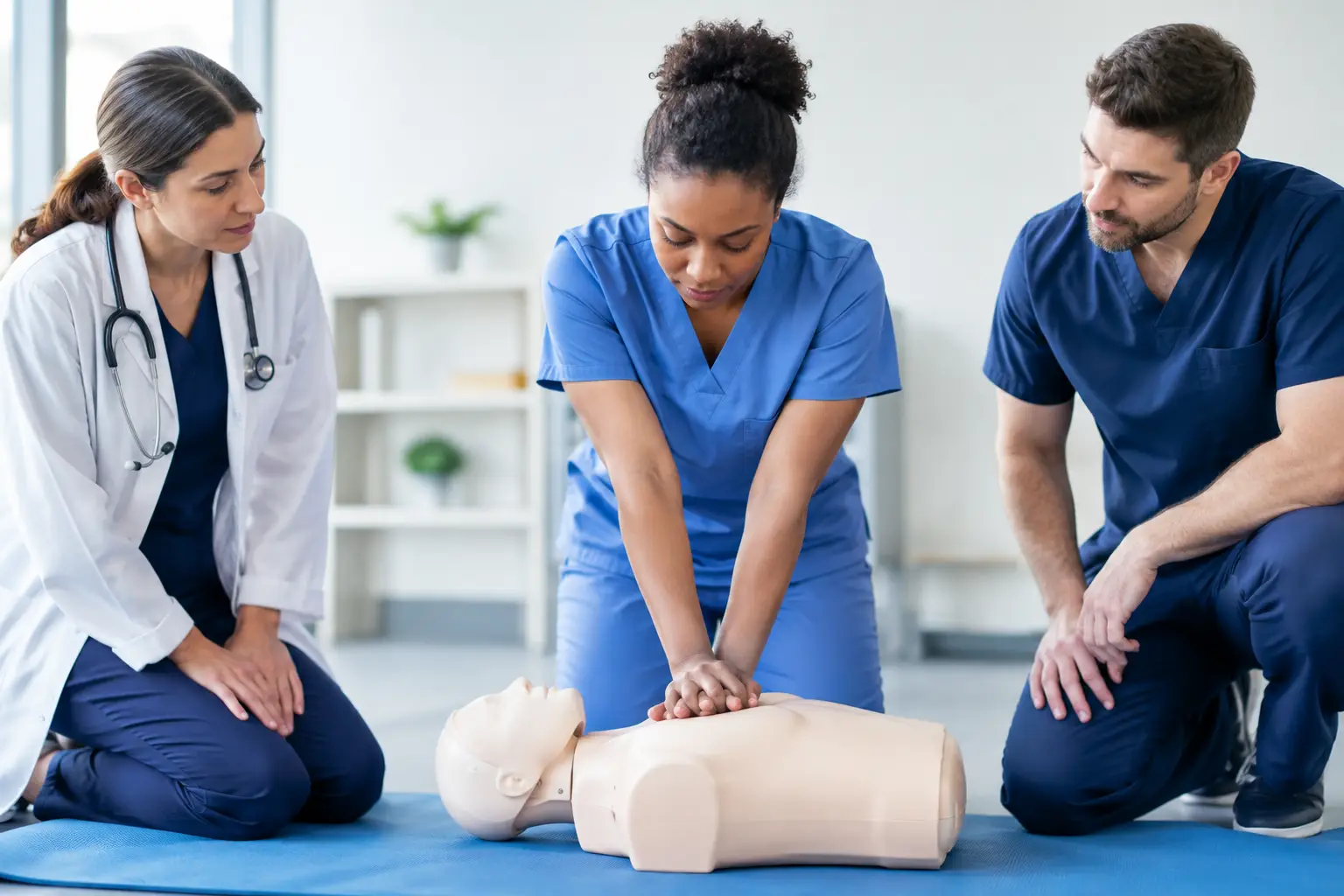
A patient becomes unresponsive in the waiting room. A visitor collapses near the exit. A staff member has chest pain between appointments. In each case, healthcare office CPR training helps turn a frightening, fast-moving event into a coordinated response while EMS is on the way.
Medical offices are places where people expect help. That expectation creates a responsibility to prepare both clinical and nonclinical team members for a cardiac emergency. The right training is not just about meeting a hiring requirement or renewing a card. It is about recognizing an emergency early, starting high-quality CPR, using an AED without delay, and knowing who will take charge of each task.
Why healthcare office CPR requires a team approach
A healthcare office can look very different from an emergency department. There may be one provider in the building, a small clinical staff, front-desk personnel, patients in exam rooms, and a waiting area that becomes crowded at certain times of day. When someone collapses, the first person nearby may be a receptionist, medical assistant, billing specialist, or another patient.
That is why a response plan cannot sit only with the physician or nurse. Everyone should understand the first actions: assess whether the person is responsive, call for help, activate 911, send someone for the AED, and begin CPR when indicated. Clinical staff may take on more advanced responsibilities based on their roles and credentials, but early recognition, early CPR, and early defibrillation are team responsibilities.
A good plan also accounts for the reality of a busy practice. Staff need to know how to direct arriving EMS crews, clear a path from the entrance, locate emergency equipment, manage other patients, and document the event according to office policy. Those details can feel secondary until they are the difference between a calm handoff and confusion.
BLS or CPR/AED: Choose the course that fits each role
Not every person in a medical office needs the same level of training. The correct course depends on job duties, employer policy, licensing or credentialing requirements, and the types of patients your practice serves.
Healthcare professionals who are expected to respond as part of a care team commonly need Basic Life Support, or BLS, certification. BLS training addresses high-quality CPR for adults, children, and infants; proper use of an AED; relief of choking; and team-based response skills. It is designed for healthcare personnel and others who may need to act in a professional setting.
Front-office staff, administrative employees, and some support personnel may need adult and pediatric CPR/AED and First Aid training rather than BLS. That course can be an appropriate option when their role is to recognize an emergency, start care, use an AED, and support the response until clinical personnel or EMS take over.
The distinction matters. Sending everyone to the same course may be simple to schedule, but it may not meet the actual requirements of every position. On the other hand, limiting training only to licensed clinicians can leave a dangerous gap at the reception desk, in a hallway, or during a time when clinical personnel are occupied with another patient. Review each role carefully, then build a training plan that matches it.
Certification should meet your organization’s requirements
Before booking a class, confirm what your employer, professional board, accreditation organization, or affiliated health system accepts. Many offices require nationally recognized American Heart Association or American Red Cross certification. Requirements can vary by position, specialty, and facility policy.
It is also worth checking renewal dates across the team. Staggered certifications can be manageable, but they often lead to missed deadlines and last-minute scheduling. A coordinated group training date gives leadership a clearer record of compliance and gives the full staff a chance to practice together.
What every medical office should be ready to do
A certification course teaches essential hands-on skills. Office readiness makes those skills usable in your actual space. Start with a simple emergency response procedure that every employee can explain without searching through a binder.
Your procedure should establish who calls 911, who brings the AED and emergency kit, who begins CPR, who meets EMS outside, and who manages the waiting room. In a small practice, one person may need to cover multiple duties until help arrives. That is acceptable if the team has talked through priorities: call for emergency help, get the AED, and start CPR as quickly as possible.
The AED deserves special attention. Staff should know its exact location, not just that the office has one. It should be easy to access, visible or clearly marked, and never blocked by furniture, deliveries, or locked doors. Assign someone to inspect it on a regular schedule. Check the status indicator, confirm pads and batteries are within their expiration dates, and replace any supplies used during an incident or practice scenario.
Emergency supplies should match the office’s services and patient population. A pediatric practice, for example, needs equipment and staff preparation appropriate for children and infants. Offices that provide sedation, infusions, or higher-acuity services may have additional emergency equipment and procedures. Follow applicable clinical standards, medical direction, and organizational policy when determining what belongs in your response kit.
Practice the handoff, not just the compressions
CPR skills are central, but offices also benefit from short, realistic drills. These do not need to disrupt a full day of appointments. A 10-minute scenario before opening or during a staff meeting can reveal whether people know where the AED is, which door EMS should use, and who is responsible for calling 911.
Try scenarios that reflect the situations your office could reasonably face. A patient who becomes unresponsive in an exam room requires a different response from a family member who collapses in the lobby. Consider what happens if the AED is on another floor, if the usual team lead is out, or if a bilingual staff member needs to communicate with a patient’s family while others manage the emergency.
After a drill, ask direct questions. Did someone call 911 immediately? Did the AED arrive quickly? Was the route for EMS clear? Did team members communicate roles out loud? The goal is not to embarrass anyone. It is to identify small operational issues before they become major problems under pressure.
Common gaps that weaken an office response
One common mistake is treating a current certification card as the entire emergency plan. Certification matters, but a person can know CPR well and still lose time looking for an AED, wondering who should call 911, or trying to locate the office manager.
Another gap is failing to include reception and support staff in training. These employees are often closest to public areas and may be the first to notice that something is wrong. They do not need to perform tasks outside their role, but they should be able to activate the emergency response, retrieve equipment, and begin care within the scope of their training.
Offices can also underestimate the importance of equipment checks. AED pads and batteries expire. Emergency kits get moved. A device may be placed behind a locked door after a renovation. Build these checks into a routine process rather than relying on someone to remember them during an emergency.
Finally, avoid assuming that a single annual discussion is enough. Skills fade, staff turnover happens, and office layouts change. Brief refreshers and periodic drills help keep the response familiar. They also give new employees a practical introduction to the safety culture of the practice.
Build confidence before the emergency happens
For healthcare offices in Central New Jersey and other service areas, on-site group training can make preparation more relevant because the instructor can help the team connect CPR skills to the realities of its own workplace. East Coast Safety Consulting provides American Heart Association and American Red Cross courses for healthcare professionals, office teams, and organizations that want practical, recognized training delivered by experienced instructors.
When scheduling, think beyond the certification date. Choose a format that allows staff to practice, ask questions, and understand their roles. Keep records organized, plan renewals early, and make sure new employees are included in your onboarding process. Same-day certification may be available for eligible courses, which can be especially helpful when a credential deadline is close, but preparation should never stop at the card.
A well-prepared office does not promise that emergencies will be easy. It gives people a clear next step when seconds matter: call, bring the AED, begin care, and work together until help arrives.
Leave a Reply