
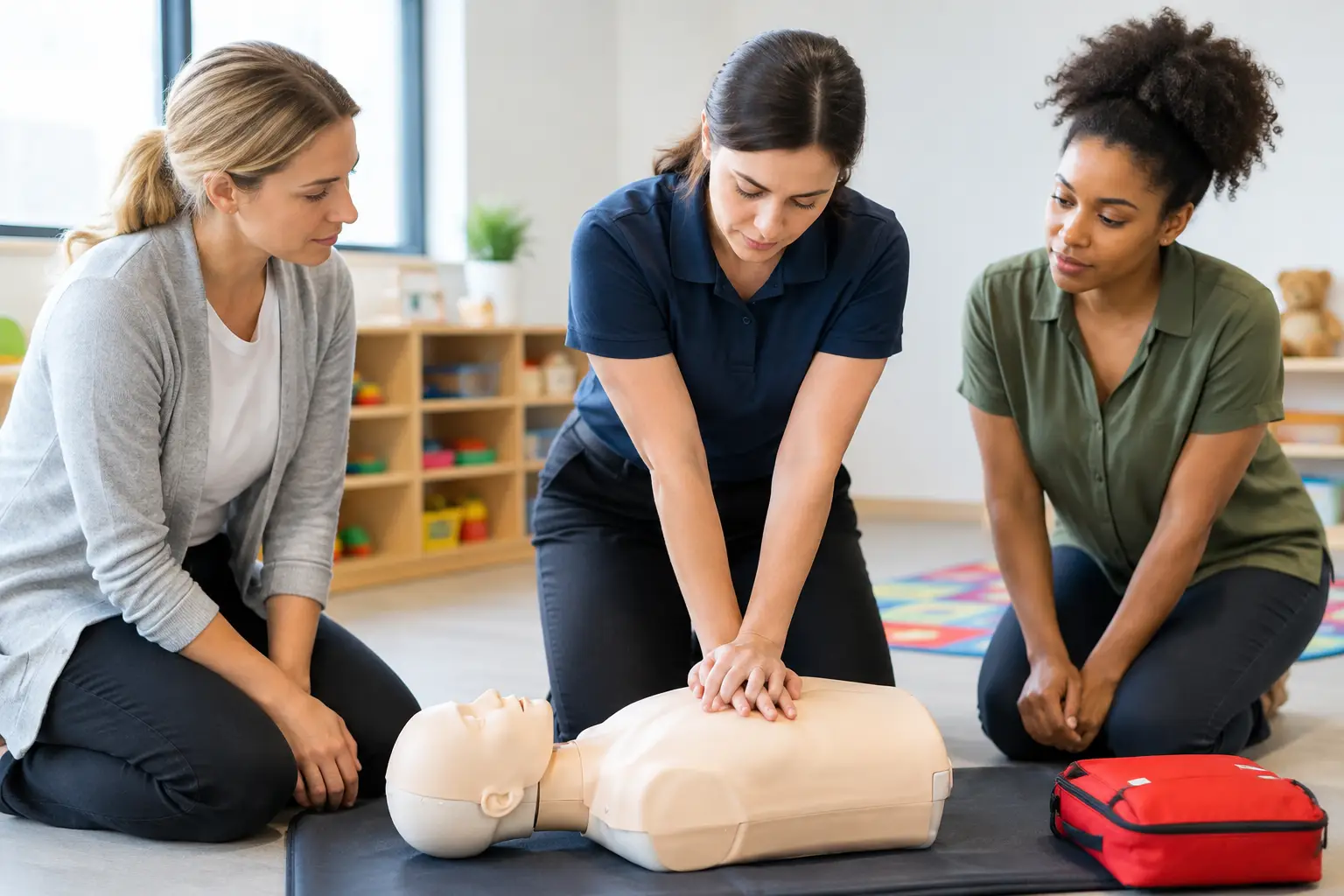
A child choking at snack time, a fall on the playground, a sudden allergic reaction, or an infant who is not breathing normally can change the pace of a childcare setting in seconds. Childcare emergency response training prepares caregivers to recognize what is happening, take the right first steps, and communicate clearly while emergency help is on the way.
For childcare providers, babysitters, teachers, camp staff, and parents, the goal is not to expect the worst. It is to be ready enough that fear does not take over when a child needs help. Quality training builds practical skills, sound judgment, and the confidence to act without delay.
Why Childcare Emergencies Require Specialized Training
Children are not simply smaller adults. Their airways are smaller, their bodies can react differently to illness and injury, and they may not be able to explain where they hurt or what they swallowed. An emergency response that is appropriate for an adult may need to be adjusted for an infant or child.
That is why general safety knowledge is not always enough for someone responsible for young people. Childcare emergency response training focuses on age-appropriate assessment and care, including how to identify breathing emergencies, respond to choking, control bleeding, recognize possible shock, and provide CPR when needed. It also teaches caregivers how to use an AED appropriately for pediatric patients when equipment and pads are available.
The value is especially clear in group settings. One caregiver may be assisting an injured child while another supervises the remaining children, calls 911, contacts a parent or guardian, and retrieves emergency supplies. Training helps staff work from a shared plan instead of trying to create one in the moment.
The Skills Caregivers Need to Practice
An emergency course should cover more than a slideshow and a written test. Caregivers need opportunities to practice the actions that may be required under pressure. Hands-on instruction helps turn a sequence of steps into a response someone can recall when a child is scared, crying, or unresponsive.
Pediatric CPR is central to that preparation. Participants learn how to assess responsiveness and breathing, call for assistance, deliver chest compressions and rescue breaths when indicated, and continue care until help takes over. Proper technique matters, but so does knowing when to begin. Waiting for certainty can cost valuable time when a child is unresponsive and not breathing normally.
Choking response training is equally important in childcare environments. Food, small toys, loose objects, and everyday supplies can become hazards quickly. Caregivers should know the difference between a child who is coughing effectively and one who cannot breathe, cry, or make sounds. They also need to practice the correct choking relief techniques for infants and children.
First aid adds another layer of readiness. Depending on the course, this may include responding to cuts, burns, suspected fractures, seizures, allergic reactions, asthma emergencies, heat-related illness, poisoning concerns, and sudden illness. Training cannot diagnose a condition, and it should never replace medical evaluation when a child needs it. It can, however, help a caregiver provide appropriate immediate care and recognize when emergency services are necessary.
A Good Response Starts Before an Emergency
Certification is a strong foundation, but preparedness also depends on the systems around the caregiver. A well-run childcare program has current emergency contacts, accessible first aid supplies, clear pickup and release procedures, and staff members who know their responsibilities.
A simple emergency action plan should answer four practical questions:
- Who stays with the child and provides care?
- Who calls 911 and communicates with dispatchers?
- Who supervises the other children?
- Who contacts the parent, guardian, and program leadership?
The answers may change based on staffing levels and the age of the children. A home-based provider working alone will have different challenges than a daycare center with multiple classrooms. The important point is to think through those differences before an incident occurs.
Caregivers should also know where emergency equipment is stored and check it regularly. First aid kits need supplies that are easy to find and within expiration dates. If an AED is available, staff should know its location, how to retrieve it, and how it fits into the organization’s emergency procedures. Medication policies, allergy action plans, and child-specific health information should be organized so they can be accessed without searching through paperwork during a crisis.
Training for Babysitters, Childcare Staff, and Parents
The right course depends on the role a person holds. A teenager preparing to babysit may benefit from instruction that combines basic childcare practices with pediatric First Aid, CPR, and AED skills. Along with emergency response, babysitter education can cover safe feeding, diapering, behavior management, age-appropriate activities, and how to communicate professionally with parents.
Childcare employees and teachers may need a more formal certification pathway based on employer requirements, state regulations, or licensing rules. They should confirm exactly which credential their workplace accepts before registering. Some organizations require a nationally recognized pediatric First Aid and CPR course, while others have specific renewal intervals or documentation requirements.
Parents and grandparents often have different goals. They may not need training for employment, but they want to know what to do before paramedics arrive. For them, a hands-on class can replace uncertainty with a clear plan for the emergencies that worry families most: choking, falls, allergic reactions, and cardiac or breathing emergencies.
Online-only instruction can be convenient for reviewing concepts, but it may not meet every workplace or licensing requirement. It also cannot fully replace instructor feedback on compressions, rescue breaths, choking relief, and AED use. When certification is required or hands-on confidence is the priority, choose a course that includes in-person skills practice and follows the requirements of the employer or regulatory body.
What to Look for in a Childcare Emergency Response Course
A useful course is current, practical, and taught by an instructor who can explain not only what to do, but why the steps matter. Look for training that uses realistic scenarios and allows participants to ask questions specific to their setting. A daycare director may need help planning staff roles; a babysitter may need guidance on calling a parent after a minor injury; a parent may want to understand when fever, breathing trouble, or an allergic reaction becomes an emergency.
Nationally recognized American Heart Association and American Red Cross programs are commonly accepted for professional and personal training needs. Before enrolling, confirm whether the course includes infant and child CPR, AED use, and first aid, rather than assuming an adult-focused course covers pediatric care.
Convenience matters, too. Private group and on-site training can make it easier for childcare teams, schools, camps, and community organizations to train together. When an entire staff learns the same procedures, the program gains more than individual certifications. It gains a common emergency language.
East Coast Safety Consulting provides practical American Heart Association and American Red Cross training options for caregivers, workplaces, schools, and community groups, including pediatric-focused First Aid, CPR, and AED instruction and American Red Cross Babysitter’s Training. Experienced instruction, realistic practice, and responsive scheduling help participants get prepared without losing sight of the children and families they serve.
Keep Skills Current, Not Just Certified
A card in a wallet is useful only if the knowledge behind it is still available when needed. CPR and first aid skills can fade when they are not practiced, especially for people who have never faced a real emergency. Renew certification on schedule, review emergency plans with your team, and take drills seriously.
Childcare emergencies are stressful because children depend on adults to notice the problem, stay calm, and take action. The right training does not promise that every situation will be easy. It gives caregivers a better chance to respond with competence, compassion, and the life-saving skills a child may need most.