
A job posting may simply say “BLS required,” but the right credential is more specific than many people realize. BLS certification requirements can vary by employer, clinical role, school, licensing board, and facility policy. Choosing the wrong course – or waiting until a credential expires – can delay onboarding, clinical rotations, or a return to work.
For healthcare professionals and healthcare students, Basic Life Support training is a hands-on course built around high-quality CPR, team response, and early defibrillation. It is not the same as a general community CPR class. The goal is to help trained responders act effectively when an adult, child, or infant experiences cardiac arrest, respiratory arrest, or a choking emergency.
Who Needs BLS Certification?
BLS is commonly required for nurses, physicians, medical assistants, dental professionals, EMTs, paramedics, respiratory therapists, physical therapists, pharmacists, and other patient-facing healthcare personnel. Nursing, medical, dental hygiene, and allied-health students are often required to earn certification before entering clinical settings.
Some employers also require BLS for staff outside a traditional hospital setting. That can include behavioral health personnel, dialysis staff, urgent care employees, medical-office teams, home health workers, school health staff, and childcare professionals with clinical responsibilities.
If your workplace asks for BLS, confirm the exact credential before registering. A supervisor may specify an American Heart Association BLS Provider course, an American Red Cross BLS course, or another program accepted by the organization. A general CPR/AED course may teach valuable lifesaving skills, but it may not meet a healthcare employer’s stated requirement.
Core BLS Certification Requirements
Most recognized BLS programs have a few requirements in common: participants must complete the assigned coursework, attend the required skills session, demonstrate critical skills correctly, and pass the course assessment. The exact format and evaluation standards depend on the training organization and course version.
Required Skills Practice and Testing
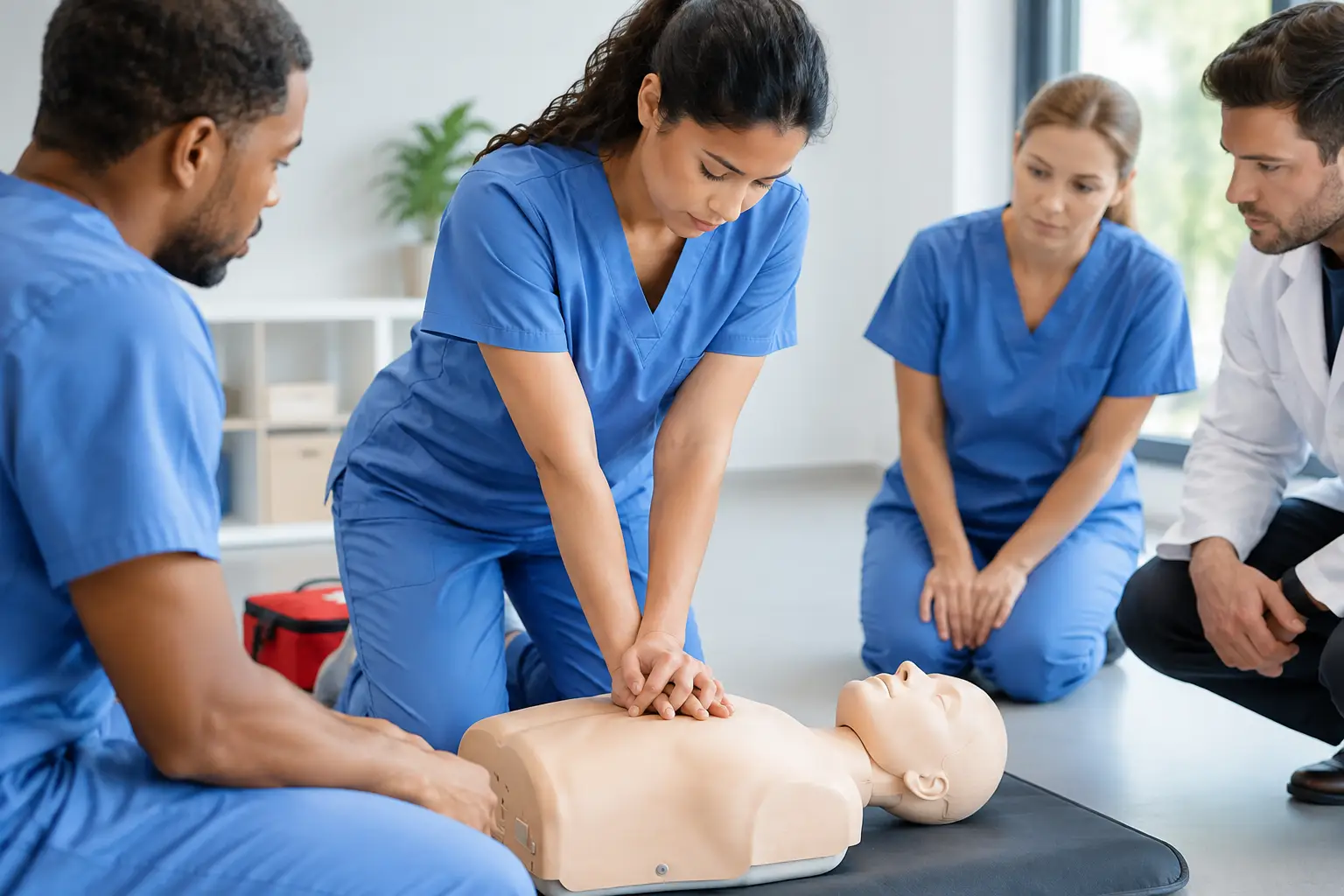
BLS is a performance-based certification. Participants practice on training manikins and are evaluated on essential skills, including high-quality adult, child, and infant CPR; proper use of an AED; rescue breathing; and relief of choking. Training also addresses how to work effectively in a team, including roles, communication, and coordinated CPR cycles.
In many courses, students must demonstrate both one-rescuer and two-rescuer response skills. Healthcare emergencies are rarely handled in a perfect, quiet environment. Team-based practice helps participants learn how to take action while communicating clearly, using available equipment, and minimizing interruptions in chest compressions.
Written or online knowledge testing is also typically required. It confirms that the participant understands the steps behind the hands-on skills, including when to activate emergency response, how to use an AED safely, and why fast, high-quality CPR matters.
A Hands-On Session Is Usually Essential
A fully online course may be convenient, but convenience alone does not make it acceptable for a healthcare credential. Many employers require an in-person skills evaluation or a blended-learning course that includes online coursework followed by an instructor-led skills session.
Before enrolling, ask your employer or program whether it accepts blended learning, whether it requires a particular provider, and whether it will accept a card issued after an online-only course. This quick check can prevent you from paying for training you later need to repeat.
No Prior Medical Experience Is Required
You do not need to be a nurse, EMT, or experienced clinician to take a BLS course. Students and new healthcare workers are welcome. A qualified instructor will explain the process, demonstrate the skills, and provide time for guided practice before evaluation.
That said, BLS moves at a healthcare-professional pace. Participants should come prepared to actively practice on the floor or another training surface, perform chest compressions, and participate in team scenarios. If you have a physical limitation that may affect participation, discuss it with the training provider in advance.
Which BLS Course Should You Take?
The right course depends on what your employer, school, or licensing organization accepts. For many healthcare professionals, an American Heart Association BLS Provider course is the requested standard. Other workplaces may accept American Red Cross BLS certification. Neither should be assumed to be interchangeable without confirmation from the organization requiring your card.
General CPR, AED, and First Aid courses are often an excellent fit for teachers, coaches, parents, fitness professionals, workplace teams, and community members. They can also be appropriate for nonclinical employees in a medical setting. However, a Heartsaver-style or community CPR class does not automatically satisfy BLS certification requirements for clinical personnel.
The course title on your completion card matters. Read your employer’s instructions carefully, especially if they name a specific training organization or say the course must include instructor-led skills testing.
How Long Does BLS Certification Last?
BLS certification is commonly valid for two years from the date of completion. Your employer, school, or professional board may require renewal before the expiration date, may set earlier deadlines for onboarding, or may have additional documentation rules.
Do not wait until the final week to renew. Classes can fill, and an expired card can affect your ability to work a scheduled shift, begin clinicals, or meet compliance requirements. Scheduling renewal training a few weeks before expiration gives you time to address any issue with records or employer approval.
A renewal course is generally designed for people with a current or recently expired credential, though eligibility rules can differ by provider. If your card has been expired for a long time, you may need to take a full provider course instead. Bring your current card or have a clear record of your expiration date when registering.
What to Bring and What to Expect
Most BLS students need very little beyond a photo ID, course confirmation, and any pre-course materials required by their training provider. Wear comfortable clothing because you will be practicing CPR and may spend time kneeling beside a manikin. Arrive on time. Skills sessions follow a structured schedule, and late arrival can make it difficult to complete all required components.
Plan to participate, not just observe. Effective CPR requires correct hand placement, appropriate compression depth and rate, full chest recoil, minimal pauses, and proper ventilation technique. Instructors are there to coach you through these details. The purpose is not to make the course intimidating. It is to ensure that your certification represents skills you can use when seconds matter.
After successful completion, eligible courses may provide same-day certification. Keep both a digital and accessible backup record of your card. Many employers ask for the card during hiring, annual compliance reviews, credentialing, or clinical placement.
Requirements for Employers and Group Training
Employers have a responsibility beyond collecting copies of employee cards. They should identify which roles require BLS, confirm the accepted credential, track expiration dates, and make training accessible enough that staff can renew on time. For medical offices, schools, childcare programs, and healthcare facilities, private group or on-site training can reduce scheduling conflicts and help ensure everyone completes the same approved program.
Group training should still preserve the hands-on standard. A larger class may be efficient, but participants need adequate equipment, instructor guidance, and time to demonstrate each required skill. The best approach balances operational needs with meaningful practice.
Avoid These Common Enrollment Mistakes
The most frequent mistake is registering for the least expensive course before verifying acceptance. Another is assuming that a previous employer’s preferred credential will meet a new employer’s policy. Requirements can change between hospital systems, offices, colleges, and licensing programs.
Also verify whether you need BLS alone or BLS plus First Aid, CPR/AED, Pediatric Advanced Life Support, Advanced Cardiovascular Life Support, or another credential. Your required course should match your actual role, not simply the most advanced option available.
For professionals and students in Central New Jersey, East Coast Safety Consulting provides practical, instructor-led options for people who need to meet workplace or school requirements with confidence. The right class gives you more than a completion card. It gives you a practiced response when a patient, coworker, family member, or member of your community needs help.