
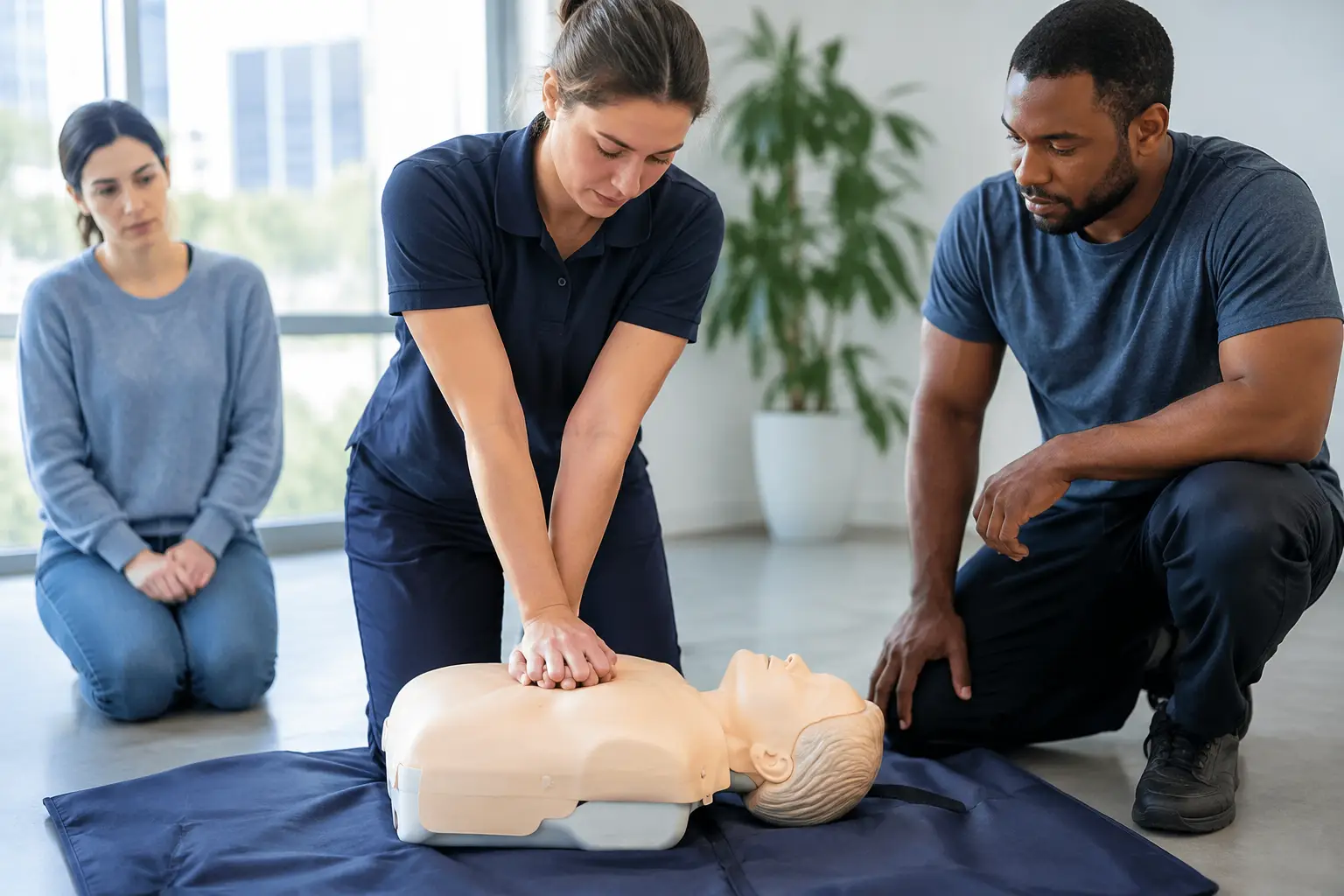
A cardiac emergency rarely gives bystanders time to feel ready. It may happen at a family gathering, on a job site, during youth sports, or in a medical office waiting room. CPR classes Grand Rapids residents choose should do more than provide a certificate. They should give people the ability to recognize an emergency, begin care quickly, use an AED, and stay focused until professional responders arrive.
For some students, certification is a job requirement. For others, it is a decision rooted in family, community, or personal responsibility. The right course depends on who you are, what your employer requires, and the situations you may face. A course for a healthcare professional is not necessarily the best fit for a parent, coach, or workplace team.
Why CPR Training Matters Before an Emergency
When a person is unresponsive and not breathing normally, every minute matters. High-quality CPR helps circulate oxygenated blood while emergency medical services are on the way. An AED can analyze the heart’s rhythm and, when appropriate, guide a rescuer through delivering a shock. These tools are designed for ordinary people to use, but training makes the process far less intimidating.
The value of class-based instruction is the chance to practice. Students learn where to place their hands, how deeply and how quickly to compress, how to give breaths when the course includes them, and how to work through the prompts of an AED. That hands-on repetition builds the muscle memory people need when stress is high.
Certification also helps create a stronger safety culture. A workplace, school, faith community, childcare program, or athletic organization is better prepared when more than one person knows how to respond. One trained person can begin care. Several trained people can call 911, retrieve the AED, manage the scene, and take turns providing CPR without unnecessary delays.
Choosing CPR Classes in Grand Rapids for Your Needs
Start with the reason you need training. Employers and licensing boards may specify the certifying organization, course type, and renewal schedule. Before registering, ask whether you need American Heart Association or American Red Cross certification and confirm that the course meets your job or professional requirement.
A nationally recognized program is often the right choice, but the course name matters. CPR and First Aid training for the general public is different from the clinical, team-based skills expected of healthcare personnel. Choosing the wrong level can mean taking another class later, so a quick check up front saves time.
CPR, AED, and First Aid for everyday responders
Adult and Pediatric First Aid/CPR/AED and Heartsaver-style programs are designed for people who may be first on scene but do not work in clinical healthcare. They are a practical fit for parents, grandparents, teachers, coaches, personal trainers, camp staff, volunteers, office employees, and community members.
These courses commonly cover recognizing emergencies, responding to adult and pediatric cardiac arrest, AED use, choking relief, and common First Aid concerns. Exact content can vary by program, so parents and childcare providers should select a course that includes pediatric skills when that is relevant to their responsibilities.
For someone simply looking to be prepared at home, a CPR/AED course may be enough. For a coach or workplace team, adding First Aid provides a broader foundation for injuries and sudden illnesses that may occur before EMS arrives.
BLS for healthcare professionals
Basic Life Support, often called BLS Provider, is generally the appropriate course for nurses, physicians, EMTs, dental professionals, medical assistants, allied health students, and other healthcare personnel. It covers high-quality CPR for adults, children, and infants, use of an AED, rescue breathing, relief of choking, and coordinated response in a healthcare setting.
BLS is more than a faster version of a community CPR class. Students practice team dynamics, communication, and multi-rescuer response. If your role involves patient care, do not assume a standard CPR card will satisfy your employer. Confirm whether BLS is required before you enroll.
Babysitter training and pediatric readiness
Young people who are beginning to babysit need more than a few tips from family members. Babysitter’s Training can help them build childcare judgment, learn how to respond to common situations, and understand their responsibility to the children in their care. Programs that combine babysitter education with pediatric First Aid, CPR, and AED certification can be especially useful for families who want a stronger emergency-preparedness foundation.
The best option depends on the sitter’s age, maturity, and the expectations of the families they serve. A certificate is valuable, but clear communication about allergies, medications, emergency contacts, and household rules remains just as essential.
What a Strong Class Experience Should Include
A good instructor makes complex steps clear without making students feel uncomfortable asking questions. Look for a course that includes hands-on practice with realistic equipment, clear coaching on compression quality, and time to work through the sequence of assessing the scene, calling for help, starting CPR, and using an AED.
Convenience matters, but it should not replace quality. A shorter or more flexible course format may be appropriate for some renewals and experienced learners, while a first-time student may benefit from more instructor interaction and practice. The same is true for blended learning. Completing material online can be useful, but skills evaluation must still be taken seriously.
Students should also understand what they will receive after successfully completing the course. Ask how certification is issued, how long it remains valid, whether same-day certification is available for the eligible course, and what documentation your employer needs. Keeping a digital and printed copy of your certification information can make renewal and employment verification easier.
Private and On-Site Training for Grand Rapids Organizations
Public classes work well for individuals and small groups. For organizations, private instruction can be the more efficient choice. A medical office may need BLS for every clinical employee. A school may need adult and pediatric emergency training. A construction, retail, or property-management team may need CPR, AED, and First Aid instruction built around its workplace schedule.
On-site training reduces travel, allows staff to learn together, and makes it easier to discuss the emergency equipment and response procedures already in place. It can also reveal practical questions: Does everyone know where the AED is? Is the first aid kit stocked? Who calls 911, meets responders, or directs bystanders during an emergency?
For larger groups, scheduling is a trade-off. Training everyone at once may be convenient, but it can leave operations understaffed. Staggered classes may take more coordination while protecting day-to-day coverage. An experienced training provider can help an organization choose the approach that fits its staffing and compliance needs.
East Coast Safety Consulting provides American Heart Association and American Red Cross training for individuals, healthcare professionals, and organizations, including private and on-site options for Grand Rapids-area teams. Instruction is built around practical skills, clear expectations, and the confidence to act when seconds count.
Come Ready to Practice, Not Just Pass
Wear comfortable clothing, arrive on time, and plan to participate. CPR practice involves kneeling or working close to the floor, applying repeated compressions to a manikin, and speaking through response steps. If you have a physical limitation or concern about performing a skill, communicate with the instructor before class so you understand the available options and course requirements.
Most importantly, approach training as preparation rather than a one-time task. Skills can fade between renewal dates. Review the location of AEDs in places you visit regularly, keep emergency contacts current, and encourage the people around you to get trained as well.
The best time to choose a CPR class is before someone needs help. Register for the course that matches your role, practice seriously, and leave knowing that you can make a meaningful difference when your community needs you.
Leave a Reply