
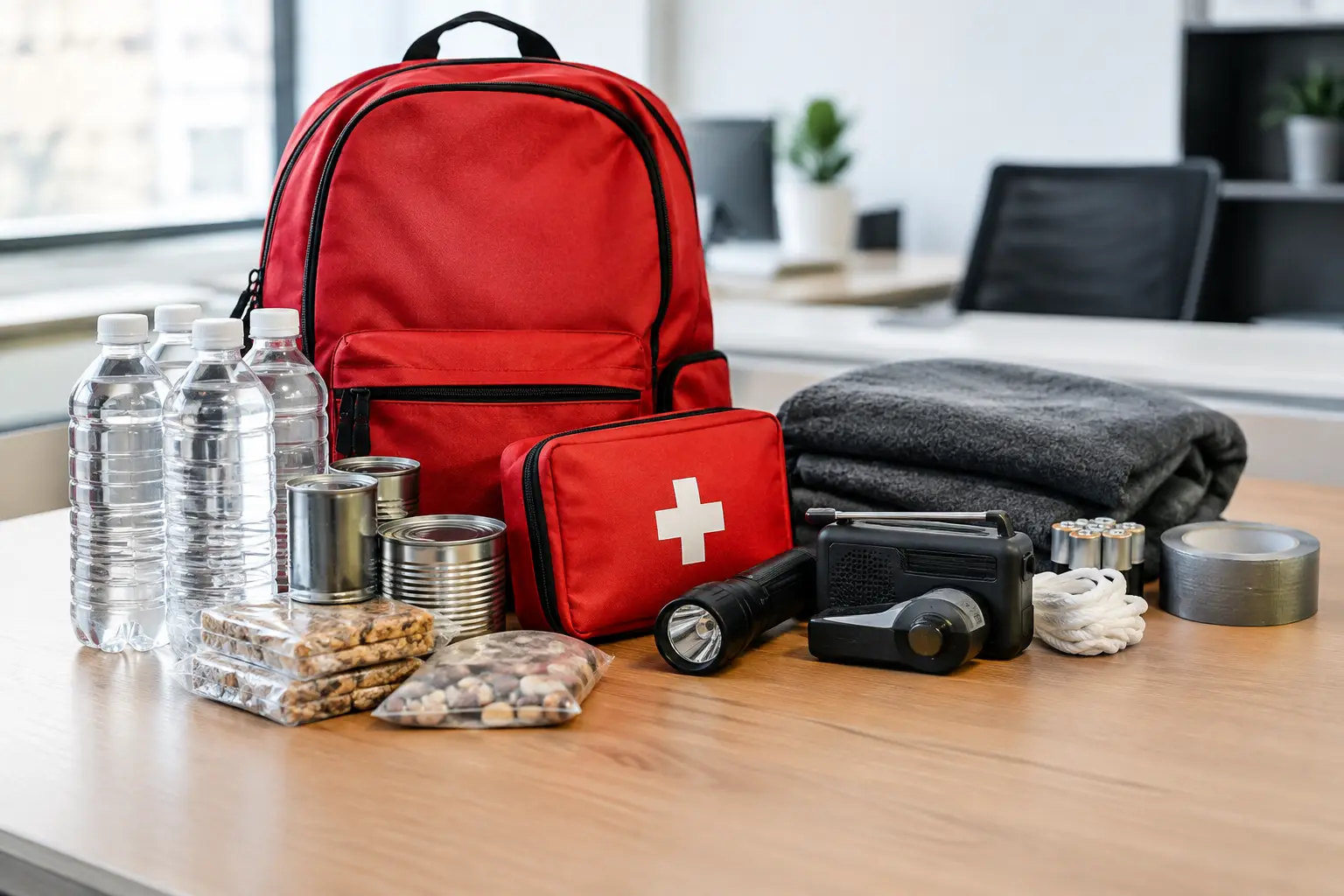
A medical emergency at work rarely happens beside a perfectly stocked cabinet. It happens in a conference room, a loading area, a reception desk, or a parking lot, often with employees unsure of what to do first. The best emergency supplies for offices give your team a practical starting point while trained responders, EMS, or building personnel take over.
A supply cabinet alone does not make a workplace prepared. Your office also needs people who know where equipment is kept, how to call for help, when to evacuate, and how to provide care within their training. Still, the right supplies can reduce confusion, support early action, and make a difficult situation more manageable.
Start With the Emergencies Your Office Could Face
There is no single shopping list that fits every workplace. A small accounting office on one floor of a shared building has different needs than a medical practice, warehouse office, school administrative suite, retail location, or property-management office. Start by considering the people present, the building layout, nearby hazards, shift schedules, local weather, and how quickly emergency services can reach you.
Medical events are a priority in nearly every setting. Severe bleeding, choking, allergic reactions, falls, diabetic emergencies, cardiac arrest, and sudden illness can occur without warning. Offices should also plan for fire alarms, power outages, severe weather, shelter-in-place events, and evacuations that leave employees outside for an extended period.
Ask a direct question: if the office had to operate without power, water, elevators, or normal access to the building for several hours, what would employees need to stay safe? That answer helps separate useful supplies from items that simply fill a bin.
12 Best Emergency Supplies for Offices
The following items form a sensible foundation for many workplaces. The quantities and exact contents should reflect your staffing level, building risks, and local emergency plan.
- A well-stocked first aid kit. Choose a commercial workplace kit or build one that includes adhesive bandages, gauze, roller bandages, tape, antiseptic wipes, cold packs, non-latex gloves, trauma shears, and a CPR breathing barrier. Check that supplies are appropriate for the number of employees and replace used or expired items promptly.
- An AED. An automated external defibrillator can be a critical resource during sudden cardiac arrest. Place it where it can be reached quickly, keep the cabinet visible and unlocked during business hours, and assign someone to monitor battery and pad expiration dates. An AED is most effective when employees are trained to recognize cardiac arrest, call 911, begin CPR, and use the device without delay.
- Bleeding-control supplies. Include trauma dressings, compressed gauze, hemostatic gauze if your organization has trained staff, and commercial tourniquets. Serious bleeding can become life-threatening within minutes. These items should be clearly labeled and kept accessible rather than buried inside a general first aid kit.
- Personal protective equipment. Disposable gloves, eye protection, face masks, hand sanitizer, and biohazard cleanup materials help employees provide care more safely. Keep multiple glove sizes available. Gloves that do not fit are less likely to be used correctly in a stressful moment.
- Emergency drinking water and shelf-stable food. Store bottled water and simple, nonperishable snacks for employees who may need to shelter in place or wait outside after an evacuation. The appropriate amount depends on your space and local risks, but even a modest supply is helpful when normal access is interrupted.
- Flashlights and spare batteries. Power failures affect more than lighting. They can disable card access, elevators, Wi-Fi, HVAC systems, and electronic door controls. Keep reliable flashlights in designated locations, and avoid assuming that employees’ phone lights will be enough for an extended outage.
- Battery-powered or hand-crank communications. A weather radio can provide updates when internet service and cellular networks are unreliable. Add portable charging banks and charging cords compatible with common devices. Communication equipment matters most when it is stored, labeled, and tested before an emergency.
- Fire extinguishers and fire blankets where appropriate. Fire extinguishers should match the hazards in the workplace and be inspected on schedule. Employees should understand that evacuation is usually the safer choice when a fire is growing, producing heavy smoke, or blocking an exit. A fire extinguisher is not a substitute for a clear evacuation plan.
- Evacuation and shelter supplies. Keep high-visibility vests, whistles, clipboards, pens, printed employee rosters, and basic weather protection near the evacuation assembly point or exit kit. These tools help designated staff account for people without relying solely on a phone app or office computer.
- Blankets, ponchos, and basic comfort items. A fire alarm or building emergency may put employees outside in rain, cold, or extreme heat. Compact blankets, ponchos, sunscreen, and cooling supplies can be especially valuable for offices with older adults, visitors, children, or staff with medical needs.
- Sanitation supplies. Include toilet paper, tissues, disinfecting wipes, trash bags, soap, feminine hygiene products, and disposable towels. These may seem secondary until a building water issue, weather event, or extended shelter-in-place situation makes them necessary.
- Printed emergency information. Store emergency contacts, the building address, floor plans, utility shutoff information when applicable, evacuation routes, meeting locations, and instructions for reporting an incident. During a crisis, clear printed information can be more dependable than a password-protected computer file.
Supplies That Depend on Your Workplace
Some emergency items require more careful planning. Naloxone can be a meaningful addition for workplaces in communities affected by opioid overdoses, but staff should understand how it is stored, when to use it, and the need to call 911. Epinephrine is typically prescribed for a specific person, so an organization should seek appropriate medical, legal, and policy guidance before considering stock epinephrine.
Medical offices, childcare programs, gyms, manufacturing sites, and locations with public-facing traffic may need additional supplies based on their exposures. Chemical splashes may call for eyewash equipment. Outdoor work may require heat illness supplies. A workplace with employees who use wheelchairs or have mobility limitations may need evacuation chairs or individualized assistance plans.
Storage Matters as Much as the Supply List
An excellent kit that nobody can find will not help when seconds matter. Place supplies in visible, marked locations that are accessible to staff and protected from theft, excessive heat, moisture, or tampering. Larger offices may need more than one first aid kit or AED, particularly when employees are spread across floors, departments, or separate buildings.
Avoid locking essential equipment in a manager’s office. If the manager is absent, the office is closed, or the emergency occurs after hours, access becomes a problem. Employees should know the location of first aid supplies, AEDs, fire extinguishers, exits, and the outdoor assembly area as part of onboarding and periodic safety refreshers.
Create a simple inspection schedule. A designated employee can check first aid supplies monthly, while AED readiness indicators, batteries, and electrode pads should be reviewed according to the manufacturer’s instructions. Record what was checked, what needs replacement, and who is responsible for follow-up. This small routine prevents an unpleasant surprise when a kit is needed most.
Train People, Not Just Procedures
Supplies support action, but trained people make the difference. Employees do not need to become emergency professionals to learn how to recognize an emergency, activate 911, perform CPR, use an AED, control severe bleeding, or assist with an orderly evacuation. Hands-on training builds confidence that a written policy cannot create by itself.
It also helps to identify workplace roles in advance. Decide who calls 911, who meets responders, who brings the AED or first aid kit, who checks restrooms and common areas if it is safe to do so, and who accounts for staff and visitors. Cross-train more than one person for each role. Emergencies do not wait for the safety coordinator to be in the building.
East Coast Safety Consulting provides on-site CPR, AED, First Aid, and BLS training that helps workplaces turn emergency equipment into practical response capability. For offices in Central New Jersey and beyond, private group training can be tailored to the people, setting, and risks involved.
A prepared office is not the one with the fullest closet. It is the one where employees can find the right supplies, take the first safe steps, and support one another until help arrives.
Leave a Reply