
A CPR card may satisfy a job requirement, but an emergency does not care how quickly someone clicked through an online lesson. This hands on CPR course review looks at what separates a meaningful practical class from training that leaves students unsure of what to do when a person suddenly collapses.
The strongest CPR courses do more than explain the steps. They give students repeated, guided practice with the same decisions and physical actions they may need to use under pressure: checking the scene, recognizing an emergency, calling 911, delivering quality compressions, using an AED, and working with others until professional responders arrive.
What a Hands On CPR Course Should Deliver
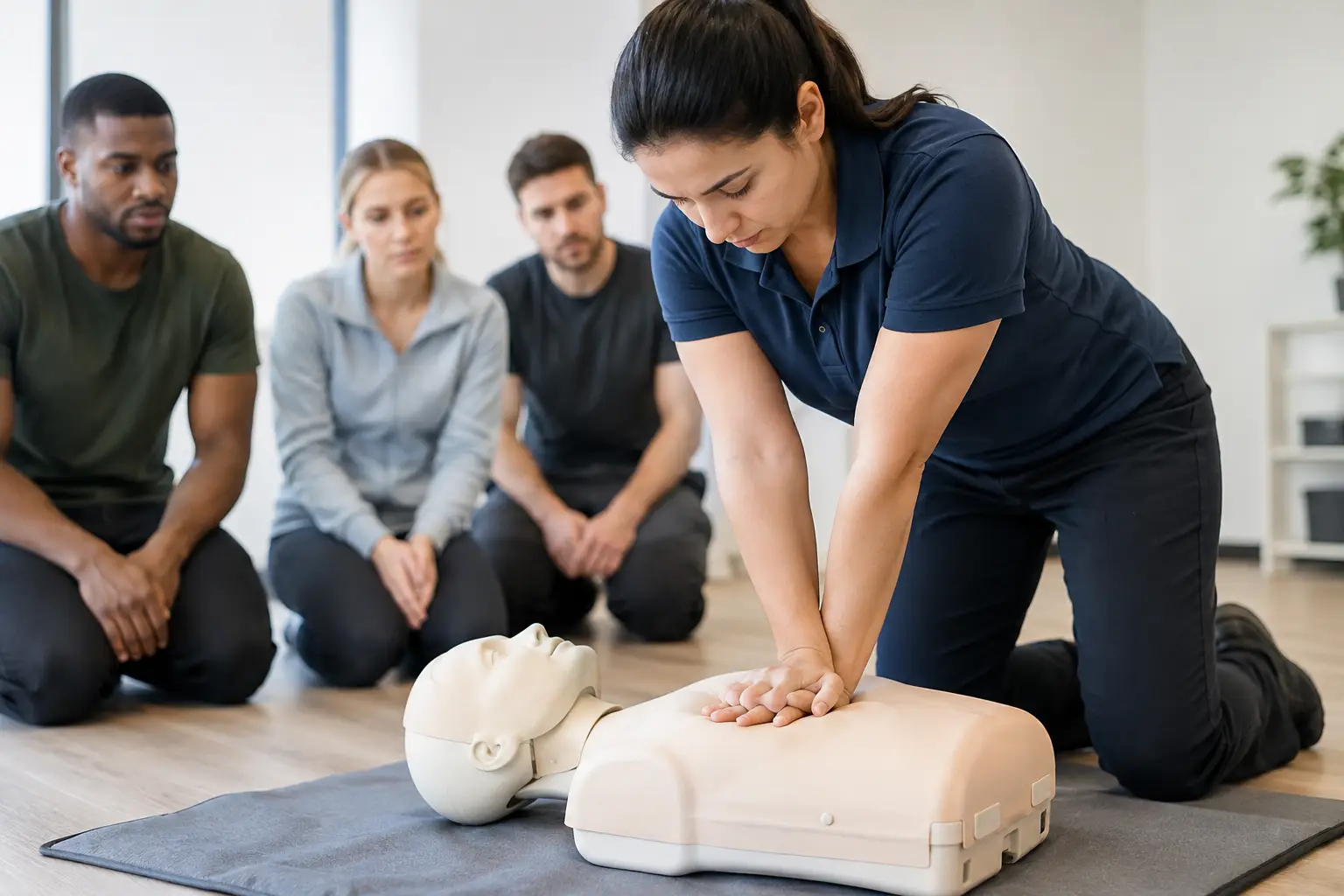
Hands-on CPR training is not simply a lecture followed by a quick turn on a mannequin. A quality course gives each participant enough practice time to build muscle memory. That matters because CPR is physically demanding, and proper compressions require more than knowing the correct number from a slide presentation.
For adult CPR, students should practice pushing hard and fast in the center of the chest, generally at a rate of 100 to 120 compressions per minute. They should learn to allow full chest recoil, minimize interruptions, and recognize when fatigue is affecting the quality of compressions. An experienced instructor watches these details, offers corrections, and explains why they matter for blood flow to the brain and vital organs.
The class should also make AED use feel routine rather than intimidating. Modern AEDs provide voice prompts, but students still benefit from physically placing pads, clearing the patient before analysis or shock delivery, and coordinating the device with CPR. In a real emergency, familiarity can save valuable seconds.
A practical course also addresses the moments before CPR begins. Participants should understand how to assess responsiveness, ask someone to call 911 and retrieve an AED, and identify abnormal breathing such as gasping. These early decisions are often where uncertainty slows a response.
Hands On CPR Course Review: What to Look For
When reviewing a CPR program, start with the credential. Many employers, healthcare settings, schools, and licensing bodies require training from a nationally recognized organization such as the American Heart Association or American Red Cross. The right choice depends on the requirement and the participant’s role.
Healthcare professionals commonly need BLS Provider training because it covers team-based response and clinical expectations. Teachers, coaches, childcare providers, office staff, parents, and community members may need an adult and pediatric First Aid/CPR/AED course or a Heartsaver-style program. A course can be excellent and still be the wrong fit if it does not meet an employer’s or organization’s specific requirement.
Next, consider how the practical assessment is conducted. Students should have an opportunity to demonstrate the skills, not merely observe them. Look for instruction that includes real-time feedback on compression rate, depth, hand placement, ventilation technique when applicable, AED pad placement, and communication with a second rescuer.
Class size also matters. Larger groups can work well when the course is properly staffed and organized, but every participant needs meaningful time with the equipment. If students spend most of the class waiting in line, the learning experience becomes less effective. Small-group practice and attentive coaching are especially valuable for first-time learners and anyone returning after a long gap.
The Value of Instructor Experience
The course materials matter, but the instructor shapes how well students retain them. A knowledgeable instructor can turn a checklist into a realistic, approachable learning experience. They can explain what a person may actually see during cardiac arrest, why gasping is not normal breathing, and how bystanders can divide tasks rather than panic or stand back.
Experienced instructors also know how to correct technique without making people feel embarrassed. Some students worry that they are not strong enough to perform CPR. Others are anxious about practicing rescue breaths, using an AED, or responding around a child. Clear guidance helps them focus on what they can do immediately and effectively.
For workplaces and schools, an instructor should be able to tailor examples to the environment. A medical office may need to discuss team roles and emergency equipment. A childcare program needs pediatric considerations. A manufacturing site may want to connect CPR, first aid, and AED response to its emergency action plan. The certification standards stay consistent, while the discussion becomes more relevant.
Online, Blended, or Fully In-Person Training?
There is no single format that suits every learner. Fully in-person training provides the most direct opportunity for practice, questions, and feedback. It is often the best choice for people who are new to CPR, feel uncertain about the material, or want the confidence that comes from working through scenarios with an instructor.
Blended learning can be a practical option when a student completes knowledge work online and attends an in-person skills session. This format can reduce classroom time while preserving the hands-on portion. It works well for busy professionals, provided the skills session is properly scheduled and meets the requirements of the certifying organization.
A completely online CPR course may be useful for general awareness, but it may not meet employment, licensing, or organizational requirements. It also cannot fully replicate the physical feedback of practicing on a manikin or responding as part of a team. Before registering, verify what your employer, school, or licensing authority accepts.
Signs a Course Is Worth Your Time
A strong course is organized, practical, and respectful of the fact that participants have different reasons for attending. It begins on time, uses clean and functional equipment, explains the certification process clearly, and leaves room for questions. Students should finish with a clearer sense of what to do first, not just a certificate in their inbox.
Pay attention to whether the training covers the people you may be responsible for. Parents, babysitters, school staff, and childcare providers should seek training that includes infant and child CPR, choking response, and pediatric first aid when appropriate. Employers should consider whether staff also need first aid instruction, naloxone awareness, or training connected to workplace hazards.
Convenience has value, too. Evening and weekend options, private group classes, on-site workplace training, and eligible same-day certification can make compliance easier without sacrificing quality. Still, speed should not replace skill practice. The goal is to get certified quickly and leave prepared to act.
Who Benefits Most From Hands-On Practice?
Everyone benefits from practical CPR instruction, but it is especially valuable for people likely to be present when an emergency occurs. That includes healthcare workers, dental and medical office staff, teachers, coaches, fitness professionals, security personnel, caregivers, parents, babysitters, and workplace response teams.
It is equally valuable for someone with no formal safety role. Most cardiac arrests happen outside a hospital, often at home. A family member, neighbor, coworker, or bystander may be the first person able to recognize the emergency, call for help, start compressions, and use an AED before EMS arrives.
For organizations, group training can build a more coordinated response. Employees learn who calls 911, who retrieves the AED, who directs responders to the location, and how to take over compressions when another rescuer becomes tired. That coordination is difficult to gain from individual online training alone.
A Practical Standard for Choosing CPR Training
The best hands-on course is one that meets your certification requirement, gives you genuine practice, and is led by an instructor who can make emergency skills understandable. Do not choose solely on price, course length, or the promise of a fast certificate. Those details matter, but they are secondary to whether you can recognize an emergency and begin the right actions without delay.
East Coast Safety Consulting provides nationally recognized American Heart Association and American Red Cross training for individuals, healthcare professionals, workplaces, schools, and community groups. Whether you need BLS, CPR/AED, First Aid, pediatric emergency training, or an on-site class for your organization, the right course should leave you more capable than when you arrived.
When the next opportunity to train comes up, treat it as practice for a person who may need you on their worst day. Ask questions, take the manikin time seriously, and choose instruction that helps you stay calm, act quickly, and use your skills with confidence.