
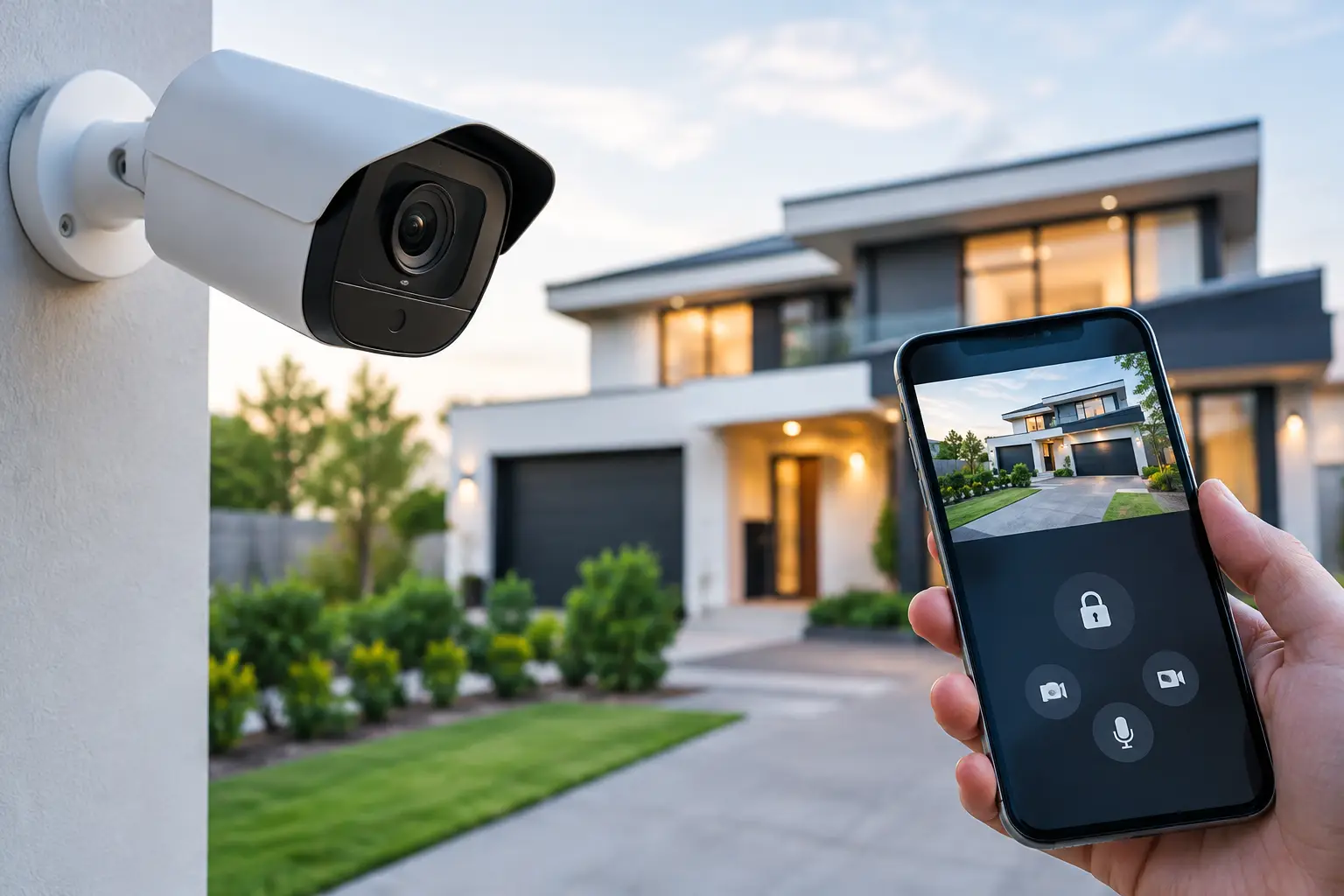
A camera mounted above a door is not a security plan. Neither is a key cabinet, a gate, or an access-control app by itself. The property security trends 2026 that matter most are moving owners and managers away from isolated devices and toward layered systems that help prevent problems, recognize them early, and support a coordinated response.
For commercial properties, retail locations, multifamily communities, schools, and offices, the goal is not to turn a building into a fortress. It is to make the property safer, more manageable, and less attractive to crime while preserving a welcoming experience for employees, customers, residents, and visitors.
Property Security Trends 2026: Layered Protection
The strongest trend is also the most practical: security decisions are becoming more connected. A property may use lighting, locks, cameras, staff procedures, visitor controls, and incident reporting together instead of expecting one technology to solve every concern.
This matters because most incidents involve a sequence of small failures. A side door is left unsecured. Shrubs block visibility. A former employee still has an active credential. An employee notices concerning behavior but is unsure who to call. When those gaps stack up, the risk grows.
A layered approach addresses different points in that sequence. Physical measures can discourage unauthorized entry. Clear procedures can help staff recognize and report issues. Cameras and access records can assist with investigation. Training can help people respond appropriately when an emergency occurs.
The right mix depends on the property. A convenience store dealing with late-night customer traffic has different needs than a multifamily building with package theft concerns or a medical office protecting patient privacy. An experienced security assessment should identify the actual vulnerabilities first, then recommend improvements that fit the operation and budget.
Smarter Cameras, With Human Oversight
Artificial intelligence is becoming a larger part of video surveillance. Modern systems can flag unusual movement, a person entering a restricted area, loitering near an entrance, or objects left in unusual locations. This can reduce the time someone spends searching through hours of video after an incident.
The benefit is speed, not certainty. AI-generated alerts can be wrong. Shadows, weather, animals, busy traffic patterns, and routine deliveries may trigger notifications. Property owners should avoid treating automated alerts as proof of criminal activity.
The better practice is to use intelligent alerts to direct a trained person’s attention. Decide who receives an alert, what they should verify, when they should contact law enforcement, and how incidents should be documented. A camera system is most useful when staff understand its purpose, coverage limits, retention settings, and response procedures.
Camera placement remains more important than buying the newest model. A poorly positioned high-resolution camera may still fail to capture a clear face, license plate, or route of travel. Entrances, exits, cash-handling areas, parking lots, mailrooms, common areas, and vulnerable side doors should be evaluated based on the risks specific to the site.
Access Control Is Replacing the Shared-Key Problem
Traditional keys remain common, but they create a familiar challenge: no one is fully sure how many copies exist or who still has them. In 2026, more properties are using electronic access control for exterior doors, restricted rooms, amenity spaces, and employee-only areas.
Mobile credentials, key fobs, PIN codes, and managed card systems can make it easier to add or remove access without rekeying an entire building. They can also create records that help clarify when a door was accessed and by which credential.
That does not mean every property needs a complex system. A small office may benefit most from upgraded door hardware, a documented key-control process, and a clear policy for collecting keys at separation. A larger apartment community or multi-tenant building may need scheduled access permissions, audit trails, and remotely managed credentials.
The critical issue is administration. Access permissions should be reviewed regularly, especially after employee turnover, vendor changes, tenant move-outs, or changes in building use. Convenience should never mean leaving critical doors unlocked or allowing credentials to be shared informally.
Cybersecurity Is Now Part of Physical Security
As cameras, alarms, door systems, and intercoms connect to networks, they also become potential cyber targets. A security device with a weak password or outdated software can expose video feeds, access data, or other connected systems.
Property managers do not need to become information technology specialists, but they should ask practical questions. Who has administrative access to the system? Are default passwords changed? Are software updates handled on a schedule? Is multi-factor authentication enabled when available? What happens to accounts and data when a vendor relationship ends?
Separating security devices from general guest or office networks can also reduce risk. Before buying a system, confirm who owns the data, where recordings are stored, how long they are retained, and what support is available after installation. Lower upfront cost can become expensive if the provider offers limited security controls or poor long-term service.
Better Lighting and Environmental Design Still Work
Technology receives attention, but basic environmental design remains one of the best investments a property can make. Clear sightlines, maintained lighting, visible addresses, trimmed landscaping, functioning gates, and orderly common areas communicate that the property is actively managed.
Crime prevention through environmental design, often called CPTED, focuses on how a space influences behavior. A well-lit walkway and visible entrance may discourage concealment. Clear boundaries between public and private spaces can reduce confusion about where visitors belong. A reception area arranged to acknowledge arrivals can improve awareness without making guests feel unwelcome.
Lighting should be evaluated at night, not just during business hours. Walk the parking area, rear entrance, dumpster enclosure, stairwells, and paths between buildings after dark. Look for burned-out fixtures, glare that interferes with camera views, and areas where trees or parked vehicles create hiding places.
For multifamily properties, package rooms, laundry areas, garages, and mail areas deserve special attention. For retail and commercial sites, rear delivery doors, employee entrances, cash offices, and parking lots often require a closer look. Small corrections in these spaces can have an immediate effect.
Security Planning Is Becoming More People-Centered
Equipment can support security, but people still make the decisions that matter most during a concerning event. In 2026, more organizations are strengthening the human side of their plans: staff awareness, de-escalation, emergency communication, incident reporting, and coordination with local responders.
Employees should know how to report a concern, who is responsible for making decisions, and when an issue requires emergency services. They should also understand their role. Most employees are not expected to intervene physically. Their job may be to move people away from danger, notify a supervisor, preserve information, or call 911 when there is an immediate threat.
Clear procedures are especially important for workplaces with frequent public contact. Retail staff, leasing teams, front-desk employees, healthcare offices, schools, and community organizations can face unpredictable interactions. Training should be realistic, straightforward, and tailored to the setting rather than copied from a generic policy manual.
Emergency readiness also extends beyond crime. A complete property plan considers medical emergencies, fire, severe weather, power outages, workplace violence, and evacuation or shelter procedures. CPR, AED, and First Aid training can be an important complement to physical security planning because the first few minutes of a medical emergency often determine what help is possible before responders arrive.
Privacy and Trust Require Careful Decisions
More monitoring creates more responsibility. Cameras should support legitimate safety and operational needs, not become a substitute for good management or a tool for unnecessary surveillance. Properties must consider where cameras are appropriate, who can view recordings, and how residents, employees, and visitors are informed.
Areas with an expectation of privacy should never be recorded. Audio recording brings additional legal and privacy considerations that vary by location. Facial recognition also deserves careful scrutiny because accuracy, bias, data retention, and community trust can create significant concerns.
A useful question for every security upgrade is simple: does this measure reduce a defined risk in a way that is proportionate and respectful? If the answer is unclear, pause before purchasing.
Start With the Gaps You Can See
The most useful security improvements rarely begin with a product catalog. They begin with an objective look at the property, its daily routines, past incidents, physical layout, and the people who use it.
Walk the site with fresh eyes. Check doors, lighting, signs, cameras, landscaping, visitor flow, key control, and emergency contacts. Talk with employees or residents who see the property at different times of day. Their observations often reveal patterns that a floor plan cannot.
A professional security assessment can turn those observations into clear, prioritized recommendations, helping owners distinguish urgent vulnerabilities from improvements that can be phased in over time. East Coast Safety Consulting helps property owners and organizations identify practical steps to better protect people, property, and daily operations.
The best next step is not necessarily the most expensive one. It is the one that closes a real gap, can be maintained consistently, and gives the people on your property a clearer path to safety when it counts.
Leave a Reply