
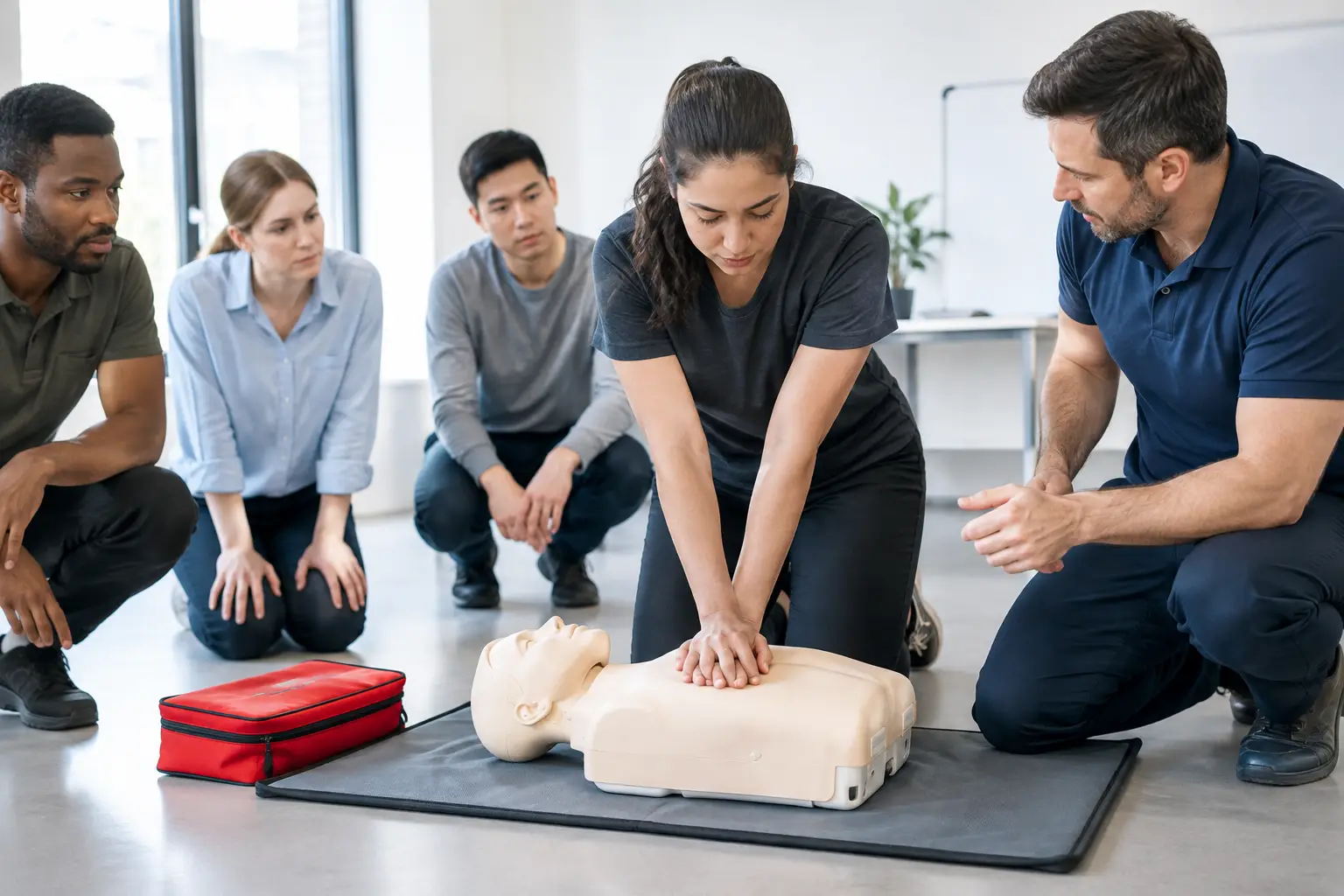
A medical emergency does not wait for a convenient time, a fully staffed shift, or a nearby public class. When someone collapses at work, in a school, or at a community event, the people already in the room may be the first line of help. Knowing how to schedule onsite CPR training gives your organization a practical way to prepare the people who are most likely to respond.
Onsite training brings professional instruction to your location, lets your group train together, and makes it easier to build a workplace culture centered on readiness. The process is straightforward, but a few early decisions can make the difference between a smooth, useful class and a scheduling headache.
Start With Your Team’s Actual Needs
Before selecting a date, identify who needs training and why. A medical office may need American Heart Association BLS Provider training for clinical staff. A childcare center may need adult and pediatric First Aid, CPR, and AED certification. An office, warehouse, school, fitness center, property management team, or community organization may be best served by a Heartsaver or American Red Cross CPR, AED, and First Aid course.
The right course depends on job responsibilities, employer policies, state or licensing requirements, and the ages of the people your team serves. Do not assume that a general CPR class meets every professional requirement. Healthcare personnel, for example, commonly need BLS rather than a lay-responder CPR course. Childcare professionals should confirm whether pediatric content and First Aid are required.
It also helps to separate first-time students from renewal students. Renewal participants may be familiar with the material, but they still need a complete course that meets their credentialing requirements. A quality instructor can help you match the class to your group instead of asking employees to guess which option applies.
Decide Who Should Attend
Training only a small group may meet a minimum requirement, but it can leave gaps when employees are off-site, on break, working another shift, or no longer with the organization. Consider coverage across departments, shifts, floors, and locations. Include supervisors, front-desk staff, coaches, teachers, maintenance personnel, and others who may be present when an emergency occurs.
For smaller organizations, training the entire team is often the simplest approach. For larger employers, scheduling multiple sessions may be more practical. The goal is not merely to collect certificates. It is to make sure someone capable and confident is likely to be nearby.
How to Schedule Onsite CPR Training Step by Step
Once you know the course and approximate class size, scheduling can move quickly. Start by contacting a qualified training provider with a few key details: your location, preferred dates, number of participants, course needs, and any deadline tied to compliance, hiring, licensing, or expiring certifications.
Be clear about whether your team needs CPR only or a combination of CPR, AED, and First Aid. If you are uncertain, explain your workplace and the roles of attendees. An experienced provider can recommend an appropriate American Heart Association or American Red Cross program.
Next, choose a date that protects attendance. Avoid scheduling during your busiest customer hours, major deadlines, staff meetings, or periods when essential coverage is thin. Some employers divide their team into morning and afternoon sessions. Others schedule training on a lower-volume day or during a planned professional-development period.
Ask how long the selected course will take and build in a little extra time for sign-in, setup, breaks, and questions. CPR training is hands-on. Participants need adequate time to practice compressions, use an AED trainer, and work through emergency scenarios rather than rushing through the skills portion.
If certification timing matters, confirm how and when credentials are issued. Same-day certification may be available for eligible courses, which can be particularly helpful for new hires, healthcare professionals, and employees facing an imminent deadline.
Prepare a Space That Supports Hands-On Learning
A conference room can work well, but it is not the only option. A classroom, community room, break room, training area, or cleared section of a larger workspace may be suitable. What matters is having enough open floor space for participants to practice skills on manikins and enough room for the instructor to move safely through the group.
Before the class, arrange chairs so attendees can see demonstrations and move furniture aside if needed. Let employees know they should wear comfortable clothing because CPR practice requires kneeling and working on the floor. If a participant has a mobility limitation, injury, or other concern, encourage them to communicate it in advance so reasonable options can be discussed.
Your training provider should explain equipment needs, but it is still wise to ask about parking, building access, check-in procedures, elevators, security requirements, and available outlets. These details are small, yet they help the class begin on time.
Set Expectations With Employees Early
Send attendees a short message as soon as the session is confirmed. Include the date, arrival time, location, expected duration, course name, and any preparation instructions. Tell them whether they need to bring identification, complete online work beforehand, or notify a manager if they cannot attend.
Make the purpose clear as well. Employees are more engaged when they understand that the class is not just another requirement. They are learning how to recognize cardiac arrest, call for emergency help, give high-quality CPR, use an AED, and respond during choking or first aid emergencies when applicable.
Choose a Provider Based on More Than Convenience
Price and availability matter, especially when coordinating a large group, but they should not be the only factors. Look for a provider with recognized American Heart Association or American Red Cross programs, current instructor credentials, and experience teaching audiences like yours.
Ask how the instructor adapts examples for your setting. A school team faces different risks than a dental office, construction crew, apartment community, or youth sports organization. Training should still follow the required curriculum, but relevant discussion helps participants connect the skills to the situations they could realistically face.
It is also reasonable to ask about class-size limits, cancellation policies, certification delivery, and whether the provider can return for future renewals. A dependable training relationship makes it easier to stay ahead of expirations instead of scrambling every two years.
East Coast Safety Consulting provides private and onsite CPR, AED, First Aid, and BLS training with practical instruction shaped by real emergency-response experience. For organizations with multiple sites or changing staff, a responsive provider can become a valuable part of the safety plan rather than a one-time vendor.
Build Training Into Your Broader Emergency Plan
CPR certification is a critical step, but it works best alongside a clear emergency-response plan. After training, make sure employees know where AEDs, first aid kits, emergency exits, and emergency contact information are located. Review who calls 911, who meets responding EMS personnel, and who communicates with family members or leadership if an incident occurs.
If your location has an AED, confirm that it is visible, accessible, maintained according to the manufacturer guidance, and known to the people who may need it. The best AED is not helpful if it is locked in an office, hidden in a storage room, or unfamiliar to the staff.
Consider brief refreshers between formal certification classes. A five-minute discussion during a staff meeting about AED location, emergency calling procedures, or recognizing cardiac arrest can keep the training more accessible. These reminders do not replace certification, but they help people retain what they learned.
Schedule Before Expirations Create Pressure
The easiest time to schedule onsite CPR training is before certificates are close to expiring. Keep a simple roster with employee names, course types, and expiration dates, then begin planning several months ahead. This gives you more date options and allows time to arrange coverage without disrupting operations.
Preparedness is built well before an emergency happens. Choose the right course, bring your team together, give them time to practice, and treat their certification as part of the care you provide to employees, customers, students, patients, and your community.