
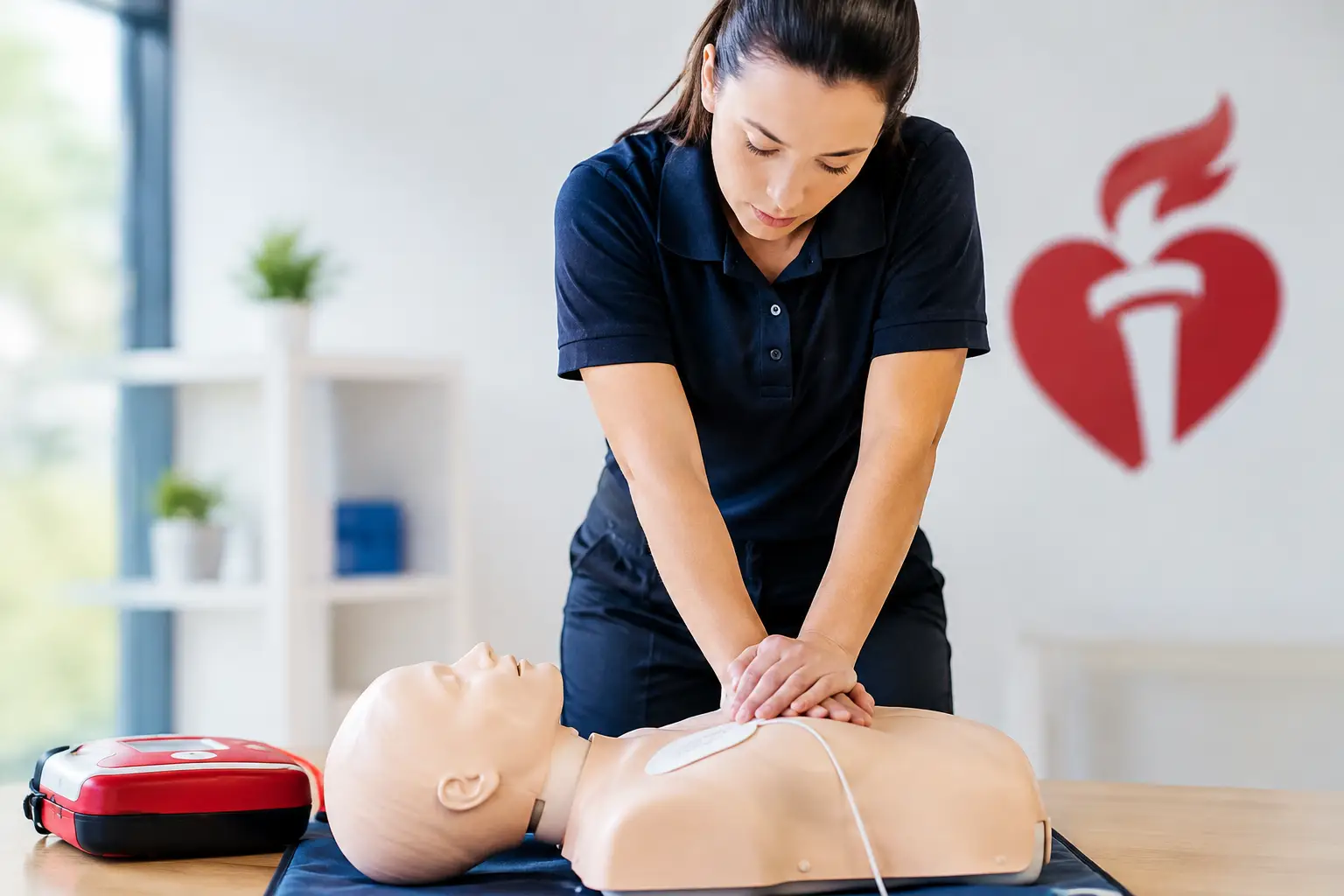
A CPR card can satisfy a hiring requirement. The ability to recognize cardiac arrest, start effective compressions, use an AED, and work calmly with others can change the outcome of an emergency. That distinction is the starting point for any American Heart Association course review. The best course is not simply the fastest one available. It is the one that matches your role, includes meaningful hands-on practice, and leaves you ready to act.
American Heart Association training is widely recognized by employers, healthcare organizations, schools, and licensing bodies. Still, not every AHA course serves the same audience. A medical assistant renewing BLS, a daycare employee seeking pediatric First Aid/CPR/AED, and a parent learning CPR for the first time should not be placed into the same program just because each needs a certification card.
American Heart Association Course Review: What Stands Out
The American Heart Association is known for science-based emergency cardiovascular care education. Its programs are designed around established resuscitation guidelines and teach participants how to respond to common emergencies with a clear sequence of actions. For many students, the strongest part of the experience is that the training connects information to physical skills: proper compression depth and rate, AED pad placement, rescue breathing, choking relief, and team communication.
That practical focus matters. Watching a video may help a person understand what CPR looks like, but emergencies do not happen on a screen. Good instruction gives students time to practice, ask questions, make corrections, and repeat skills until the process feels more familiar.
A quality class also makes room for realistic context. Healthcare professionals may need to coordinate as part of a resuscitation team. Teachers and childcare providers may need to respond while protecting other children in the room. A workplace team may need to identify who calls 911, who retrieves the AED, and who meets emergency responders at the entrance. The course framework is strong, but the instructor’s ability to make that framework relevant is what makes the training stick.
Choosing the Right AHA Course for Your Needs
Most confusion around AHA certification comes from selecting the wrong course level. Before registering, start with the requirement from your employer, licensing board, school, or organization. Ask for the exact course name rather than assuming that any CPR card will be accepted.
BLS Provider for Healthcare Professionals
Basic Life Support, commonly called BLS, is generally intended for healthcare professionals and others who work in clinical settings. It covers high-quality CPR for adults, children, and infants; AED use; relief of choking; and skills associated with responding as part of a team. Students also learn how to recognize respiratory arrest, cardiac arrest, and the importance of minimizing interruptions in chest compressions.
BLS is often the appropriate choice for nurses, nursing students, physicians, EMTs, dental professionals, medical office staff, and other clinical personnel. However, job titles do not always tell the full story. Some nonclinical employees are required to hold BLS, while some professionals only need a Heartsaver-level course. Confirm the requirement before enrolling.
Heartsaver CPR AED and First Aid for the Public and Workplace Teams
Heartsaver programs are often a better fit for employees, teachers, coaches, fitness professionals, caregivers, volunteers, and community members. Depending on the course selected, training may include adult CPR/AED, pediatric CPR/AED, First Aid, or a combination of these skills.
For many workplaces, the combined First Aid/CPR/AED format makes practical sense. CPR and AED training addresses life-threatening cardiac emergencies, while First Aid prepares employees to respond to injuries and sudden illnesses before professional help arrives. The right course depends on the hazards in the workplace, the population served, and any compliance requirements.
Parents and caregivers should consider whether pediatric content is included. Adult-only training is valuable, but children and infants have different emergency considerations. A caregiver responsible for young children benefits from instruction that reflects the situations they are most likely to face.
What a Strong Class Experience Should Include
An AHA curriculum provides the structure, but the class experience can vary based on scheduling, equipment, class size, and instructor approach. Look for a training provider that treats certification as the result of learning, not the only goal.
In a well-run course, participants should receive clear guidance before class about what to bring, how long the program will take, and whether online coursework must be completed first. During training, there should be adequate access to manikins, AED trainers, and other equipment so students are not spending most of the session waiting for a turn.
Feedback is especially valuable. CPR is a physical skill, and small corrections can matter. An instructor should be able to help participants adjust hand placement, body position, compression technique, and pacing. Students should feel comfortable asking questions about scenarios that concern them, whether that is an emergency at work, at home, on a sports field, or in a healthcare setting.
The best classes are professional without being intimidating. People learn more effectively when they can concentrate on the skill rather than worry about being embarrassed for making a mistake. CPR training should be serious, but it should also be approachable enough that students leave with confidence instead of anxiety.
Course Formats: Convenience Versus Hands-On Readiness
AHA courses may be offered as traditional instructor-led classes or blended learning programs that combine online education with an in-person skills session. Both formats can be useful when they meet the requirements of the employer or credentialing organization.
Blended learning can be convenient for busy professionals. Students complete the knowledge portion on their own schedule, then attend an in-person session to demonstrate required skills. This format can work well for renewals and for learners who prefer to review material at their own pace.
The trade-off is that online work requires self-discipline, and the in-person skills appointment is still essential. A completion certificate from an online module alone may not meet an employer’s requirement. Students should understand exactly what is included before they register, including whether a hands-on evaluation is required and how certification will be issued.
Traditional classroom courses can be especially helpful for first-time students, groups, and anyone who benefits from direct interaction throughout the lesson. The pace allows more room for questions, discussion, and instructor-led coaching. Neither format is automatically better. The right choice depends on your learning style, schedule, and certification requirement.
Certification Timing and Employer Acceptance
Many students need proof of completion quickly for a new job, clinical rotation, credential renewal, or workplace file. Same-day certification can be a major advantage when it is available for an eligible course and all requirements have been met. It is still wise to plan ahead whenever possible. Waiting until the final day before a deadline leaves little room for schedule changes or a course mismatch.
Before class, verify three details: the exact course name required, whether your employer accepts the selected training format, and when you need your certification card. If your organization requires BLS Provider, a general CPR/AED course may not be sufficient. If a childcare position requires pediatric First Aid/CPR/AED, adult-only training may not satisfy the requirement.
For employers arranging group training, private on-site instruction can reduce scheduling challenges and create a more relevant learning environment. A course delivered at the workplace can incorporate the organization’s emergency action plan, AED location, building access procedures, and specific risks. That added context is often more useful than sending employees to separate classes with no discussion of how the team will respond together.
Is an AHA Course Worth It?
For most people, the answer is yes when the course aligns with their real responsibilities. A nationally recognized certification can support employment and compliance needs, but the lasting value is practical readiness. Cardiac emergencies, choking incidents, severe bleeding, allergic reactions, and sudden illness do not wait for a convenient time or place.
The course is not a substitute for emergency medical care, and no class can make a person feel fully prepared for every situation. What training can do is reduce hesitation. It gives people a process to follow, a chance to practice before the pressure is real, and a better understanding of when to call for help.
East Coast Safety Consulting provides American Heart Association training with experienced, hands-on instruction for individuals and organizations that need practical skills and recognized certification. Whether you are renewing for work, preparing a staff team, or learning to protect the people around you, choose a course that meets the requirement and gives you time to practice the response. When an emergency happens, preparation is what helps knowledge become action.